Contact Centre Capacity Planning: A Practical Guide
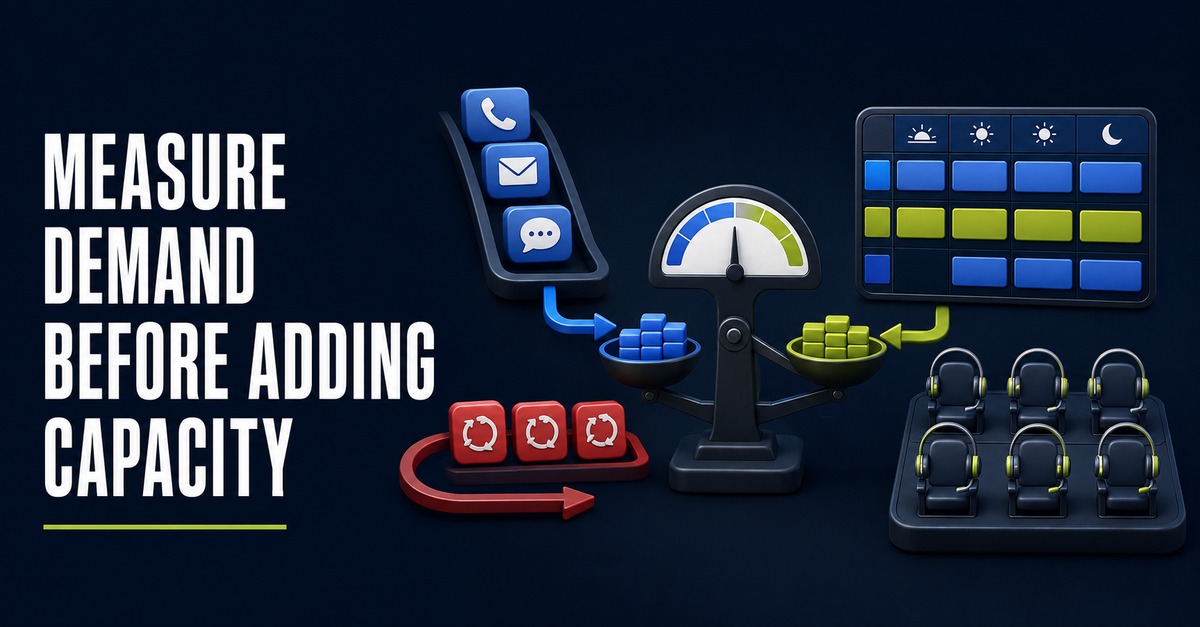
Contact centre capacity planning should begin by separating genuine new demand from repeat contact caused by unresolved work. Leaders can then convert each demand type into workload, compare it with available skills and shifts, and set clear thresholds for changing staffing, schedules or workflows.
Planning from total call volume alone is unreliable. Ten new enquiries and ten customers chasing missed callbacks create the same number of contacts, but they require different management decisions.
What the July 2026 UK services data shows
S&P Global published its final July UK Services PMI on 5 August 2026. The Reuters report on the survey said the index rose to 52.1 from 48.8 in June. A reading above 50 indicates expansion, and July was the first month of services growth since April.
The new-work index rose to 50.8 from 47.6, ending four months of decline. However, the employment measure fell for a twenty-second consecutive month. The Guardian’s economic report also noted that service-sector backlogs continued to fall, showing limited overall pressure on capacity.
These results describe a broad sector, not one contact centre. Their value is the mixed picture: activity can improve while employment declines and spare capacity remains.
That is why one positive demand signal should not automatically trigger recruitment, overtime or a technology purchase.
Why contact centre capacity planning often fails
Capacity plans usually fail because the operation measures contacts rather than the work and outcome behind them.
New demand and failure demand are combined
A first-time customer enquiry creates new demand. A customer calling again because an update was missed creates failure demand. If both are reported as inbound calls, leaders cannot see whether growth or unresolved work is driving the queue.
Average handling time hides complexity
Two six-minute calls are not necessarily equivalent. One may finish with a booking. The other may create verification, escalation and follow-up work. Capacity must include the complete case journey.
Staff numbers are confused with usable capacity
Headcount does not show who is scheduled, appropriately trained or available after absence, meetings, coaching and administration.
Hiring decisions follow short-term peaks
A campaign, billing issue, weather event or system failure can create a temporary surge. Hiring against one peak risks adding fixed cost after the underlying cause has disappeared.
Service quality is checked too late
Average response time can remain acceptable while high-risk cases age. A useful plan examines abandonment, overdue promises, oldest cases and repeated contact alongside total volume.
A six-step contact centre capacity planning framework
- Classify incoming demand: Give every contact a reason and outcome. Distinguish new enquiries, progress checks, complaints, corrections, failed transfers and reopened cases. Keep the categories limited enough for advisers to apply consistently. Review demand by channel, source, service and time. Establish how duplicate forms, calls and emails are identified.
- Measure repeat and avoidable contact: Choose a practical repeat-contact window, such as seven days, and examine why the customer returned. Useful causes include a missed callback, unclear communication, unresolved handover, unavailable information or premature closure. Not every repeat contact is avoidable. Identify those created because the process failed to deliver the promised next step.
- Convert demand into workload: For each work type, measure talk or handling time, after-contact administration, specialist review and follow-up. Include work completed outside the contact platform, such as checking compliance documents or confirming contractor availability. Use ranges where complexity varies. One average can understate capacity required for complaints, safeguarding or urgent staffing requests.
- Calculate usable capacity: Start with scheduled hours, then account for breaks, leave, absence, training, coaching, meetings and necessary administration. Map which people can handle each work type and when specialist support is available. This exposes skills gaps concealed by total headcount. Capacity can exist overall while one queue remains unsupported.
- Test service and commercial consequences: Track response time, abandonment, overdue actions, repeat contact and the age of the oldest open case. Connect these measures to the customer and commercial outcome, such as an unfilled shift, lost property enquiry, cancelled booking or escalated complaint. The plan should protect high-consequence work even when overall demand is manageable.
- Define decision triggers: Agree what would justify overtime, schedule changes, cross-training, recruitment, supplier support or workflow redesign. A trigger might require sustained demand over several weeks, a defined service failure or enough confirmed revenue to support additional cost. Record who approves the decision and its review date. This prevents a temporary queue becoming a permanent cost commitment.
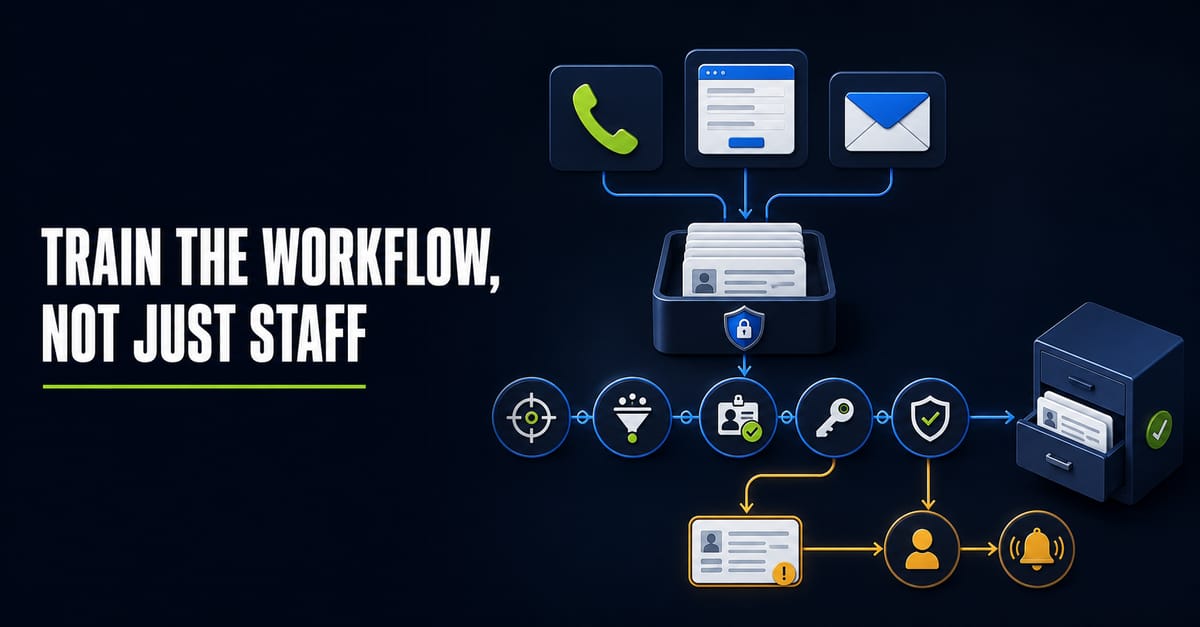
An IT consulting review can map demand, handovers and capacity before a platform is changed. Where the agreed process requires controlled routing or connections between systems, custom software development may be considered after the operating rules are clear. Further operational guidance can be organised through the Don-Clem Technology blog.
An illustrative healthcare staffing example
Consider a healthcare staffing agency whose client-call volume rises over three weeks. The headline suggests that more coordinators are needed.
A closer review separates genuine new shift requests from clients chasing unconfirmed bookings. It shows that several repeat calls follow the same handoff: a consultant records the requirement, compliance checks the worker and the client receives no update while approval is pending.
The agency first assigns an owner to every pending booking, sets an update deadline and creates visibility of the compliance hold. It then recalculates workload using the remaining new requests and necessary follow-up. Only after this does it decide whether staffing capacity is insufficient.
This is an illustrative scenario, not a Don-Clem Technology customer result. The lesson is that additional people should address verified workload, not work created by an unclear process.
What technology should and should not do
Technology should capture contact reasons and outcomes consistently, identify likely repeat contacts, show open promises, connect work across channels and provide a current view of workload by skill and priority. It should retain the assumptions behind a capacity decision so managers can test whether they remain true.
Technology should not label every repeat caller as avoidable, reduce capacity to a single average, schedule people without considering skills or recommend recruitment from a brief spike. It should support accountable operational judgement rather than replace it.
The current S&P Global PMI release schedule provides useful economic context, but each business still needs its own demand and workload evidence.
Frequently asked questions
- What is contact centre capacity planning?: It is the process of forecasting customer demand, converting it into workload and ensuring the right skills and hours are available to meet agreed service outcomes.
- How is capacity planning different from scheduling?: Capacity planning determines how much resource and which skills will be needed. Scheduling places available people into shifts and activities over shorter periods.
- Which measures should be reviewed first?: Start with new demand, repeat contact, complete handling workload, abandonment, overdue actions, oldest open cases and usable hours by skill.
- When should a contact centre recruit?: Recruit when sustained, verified workload exceeds usable capacity and the service or commercial case supports a longer-term cost. Test workflow and scheduling causes first.
- Can a spreadsheet support capacity planning?: Yes, for a controlled initial model with clear definitions, owners and version control. It becomes unreliable when several teams maintain different demand and staffing assumptions.
Conclusion
Improving service-sector conditions may create opportunities, but contact centre capacity planning must remain evidence-led. Separate new demand from unresolved work, calculate the complete workload and define decision triggers before changing staffing or technology.