Estate Agency Lead Qualification: A UK Process Guide
Estate agency lead qualification should turn every buyer enquiry into one of three controlled outcomes: a specific viewing or adviser action, a structured nurture path, or a closed record with a clear reason. To make that decision, agents need evidence about funding, chain position, budget, location, timescale and viewing commitment, not merely a name captured from a portal.
This gives negotiators a practical priority order and gives managers visibility from first contact to meaningful progression.
What Persimmon reported on 6 August 2026
Persimmon published its half-year results on 6 August 2026. The financial reporting period ended on 30 June, while its current-trading figures covered the following five weeks to 2 August.
The housebuilder said website traffic remained strongly ahead of the previous year, but enquiries were weaker in July. Open-market sales also softened in recent weeks. Excluding bulk transactions, its net private sales rate for those five weeks was 0.59 per outlet per week, compared with 0.61 in the equivalent 2025 period.
A Reuters report on Persimmon’s results also noted weaker July buyer enquiries and open-market sales below the prior-year level, while the company still expected approximately 12,500 completions in 2026.
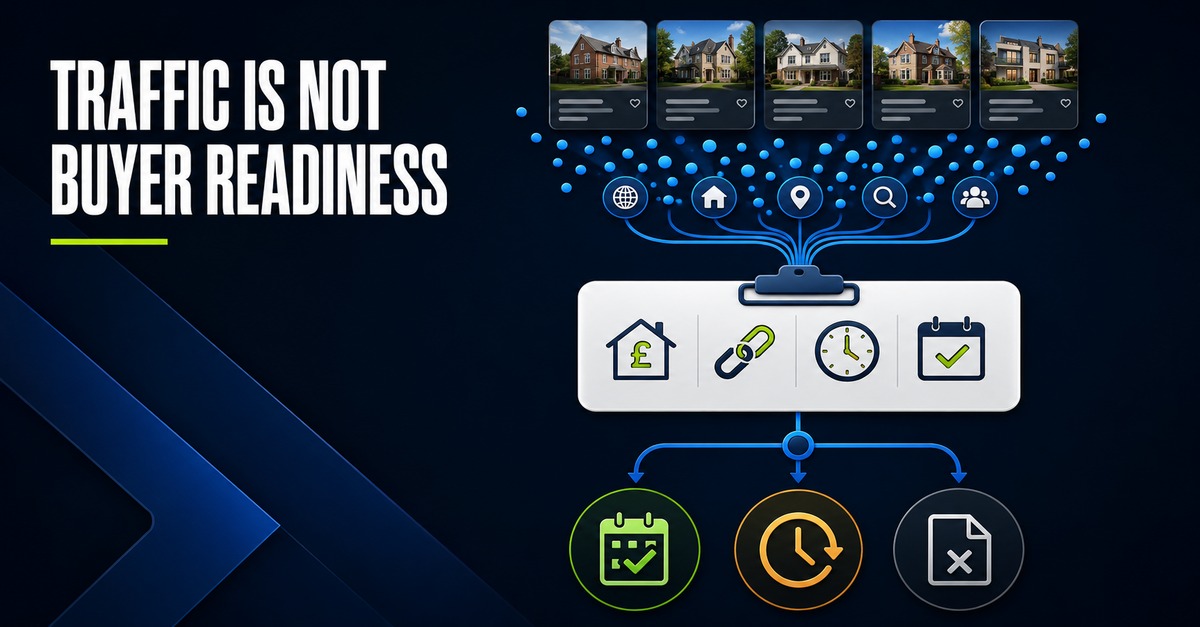
These are Persimmon’s results, not a complete measure of UK estate agency demand. Their operational value is the contrast between online attention and a weaker signal further down the buyer journey.
Why estate agency lead qualification matters
Browsing, saved listings and repeated portal enquiries are useful signals, but they do not confirm that a person can or intends to proceed.
UK Parliament’s housing-market indicators reported that mortgage approvals for house purchases totalled 58,200 in June 2026. That was 3% higher than May but 10% below June 2025. Mortgage approvals are a different measure from website activity, which is precisely why an agency needs several stages rather than one headline lead count.
Portal activity can create duplicate demand
The same buyer may use several portals and then telephone. Without record matching, three apparent leads can be one person with one unresolved requirement.
Fast response without context wastes capacity
A negotiator can respond quickly without establishing funding, chain position or viewing availability. The activity is completed, but the opportunity remains unclear.
Buyer information becomes stale
Funding, chain position, budget and timescale change. A person qualified three months ago should not automatically retain the same priority when a suitable property appears.
Early-stage buyers are either ignored or overworked
Some buyers need mortgage guidance, a valuation or more time. Treating them as immediate viewing prospects wastes effort, while closing them loses future demand.
A Six-stage estate agency lead qualification process
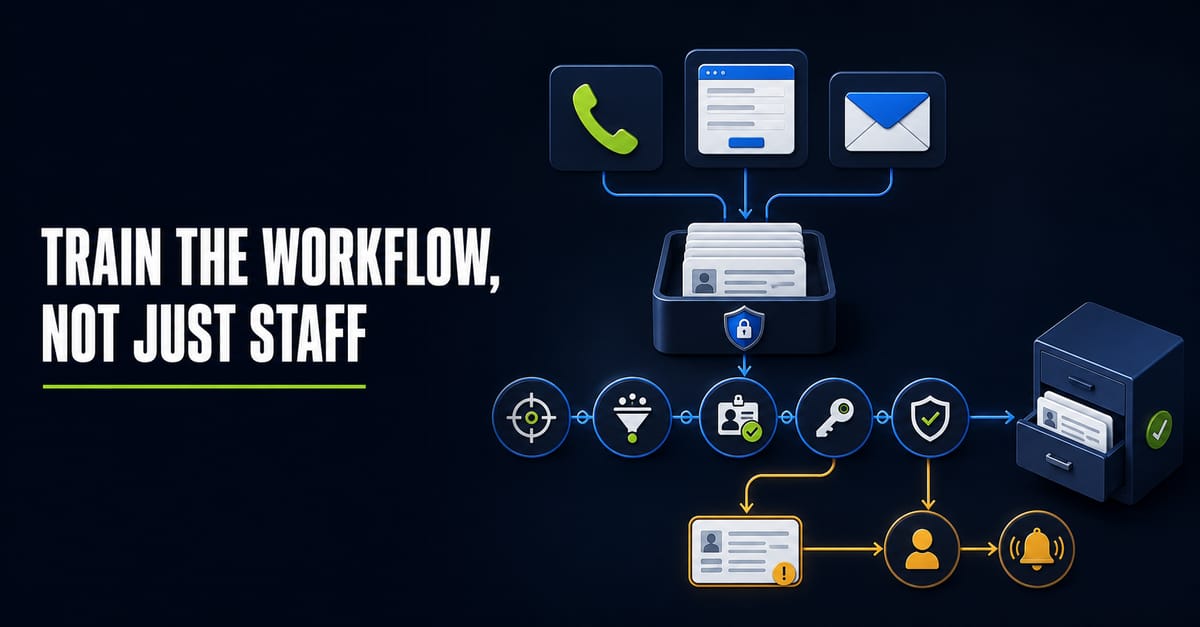
- Capture and match the enquiry: Record the property, source, time, contact details and communication route. Check for an existing applicant and preserve the original request.
- Assign response ownership: Give the enquiry to a named person with a response deadline. Define when it transfers if that negotiator is unavailable.
- Establish the property requirement: Confirm area, property type, essential features, budget and moving date. Establish whether the buyer wants only that property or suitable alternatives. This separates specific intent from general browsing without dismissing either.
- Verify the funding position: Record whether the purchase uses cash, a mortgage or both and whether an agreement in principle exists. Do not present an estimate as confirmed affordability. The UK Government’s home-buying guide explains that buyers using a mortgage should obtain an agreement in principle before making an offer. Agents should retain the status and verification date rather than a permanent yes-or-no label.
- Map the chain position: Ask whether the buyer’s property is unlisted, listed, under offer or in conveyancing. Record other material dependencies. The purpose is not to reject buyers with a chain. It is to show the vendor and negotiator what must happen next.
- Convert qualification into an action
- Use evidence to choose one route:
- Viewing-ready: A relevant property and credible ability and timescale to proceed. Offer a specific appointment and record acceptance or reason for decline.
- Nurture: A genuine requirement exists, but funding, sale preparation or timing is incomplete. Assign a useful next step and review date.
- Closed: The enquiry is duplicate, invalid, withdrawn or outside the agency’s market. Record the reason rather than silently abandoning it.
Real estate technology solutions can connect property, applicant, viewing and transaction records. An IT consulting review should define the qualification rules, ownership and reporting gaps before changing a platform. Where controlled integrations or purpose-built workflow changes are required, custom software development may be considered after those rules are agreed.
An illustrative independent-agency example
Consider an agency receiving 60 enquiries for a newly listed family home. Several come from the same applicants through different portals. Some buyers have not yet placed their own homes on the market, while others have funding agreed and can view within two days.
An uncontrolled process distributes each message separately. Negotiators duplicate calls, high-readiness buyers wait, and the vendor receives a report showing enquiry volume rather than buyer position.
A controlled process matches duplicate applicants, records funding and chain stages, offers appointments to viewing-ready buyers and creates dated actions for those needing a valuation or mortgage conversation. The vendor receives a clearer view of demand quality without the agency claiming that any buyer is guaranteed to complete.
This is an illustrative scenario, not a Don-Clem Technology customer result.
What technology should and should not do
Technology should collect enquiries from approved sources, identify likely duplicates, assign ownership, require essential qualification fields, preserve contact history and show overdue actions. It should connect the applicant to relevant properties, viewings and later transaction stages.
Technology should not infer affordability from a postcode, treat website behaviour as proof of intent, pressure buyers into unsuitable appointments or replace a professional conversation about circumstances. It should not hide weak follow-up behind a large traffic figure.
Further property-operations guidance can be organised through the Don-Clem Technology blog.
Frequently asked questions
- What should an estate agent ask a new buyer?
Ask about the property requirement, budget, funding route, agreement in principle where relevant, property to sell, chain position, timescale and viewing availability.
- Should every buyer be contacted immediately?
Every genuine enquiry should receive a prompt, appropriate response. Qualification then determines whether the next action is a viewing, adviser conversation, nurture step or closure.
- How often should buyer qualification be updated?
Update it when funding, budget, chain position or timescale changes and before relying on older information for a viewing or offer.
- Which estate agency metric matters most?
No single measure is sufficient. Review response, qualification, viewing, offer and progression measures together so traffic is connected to outcomes.
Conclusion
Estate agency lead qualification converts attention into an operational decision. Capture the original enquiry, match duplicates, verify readiness, assign one next action and measure movement from contact to viewing and offer. This helps negotiators protect their time while keeping genuine future buyers visible.