Field Service Area Management for Home-Service Firms
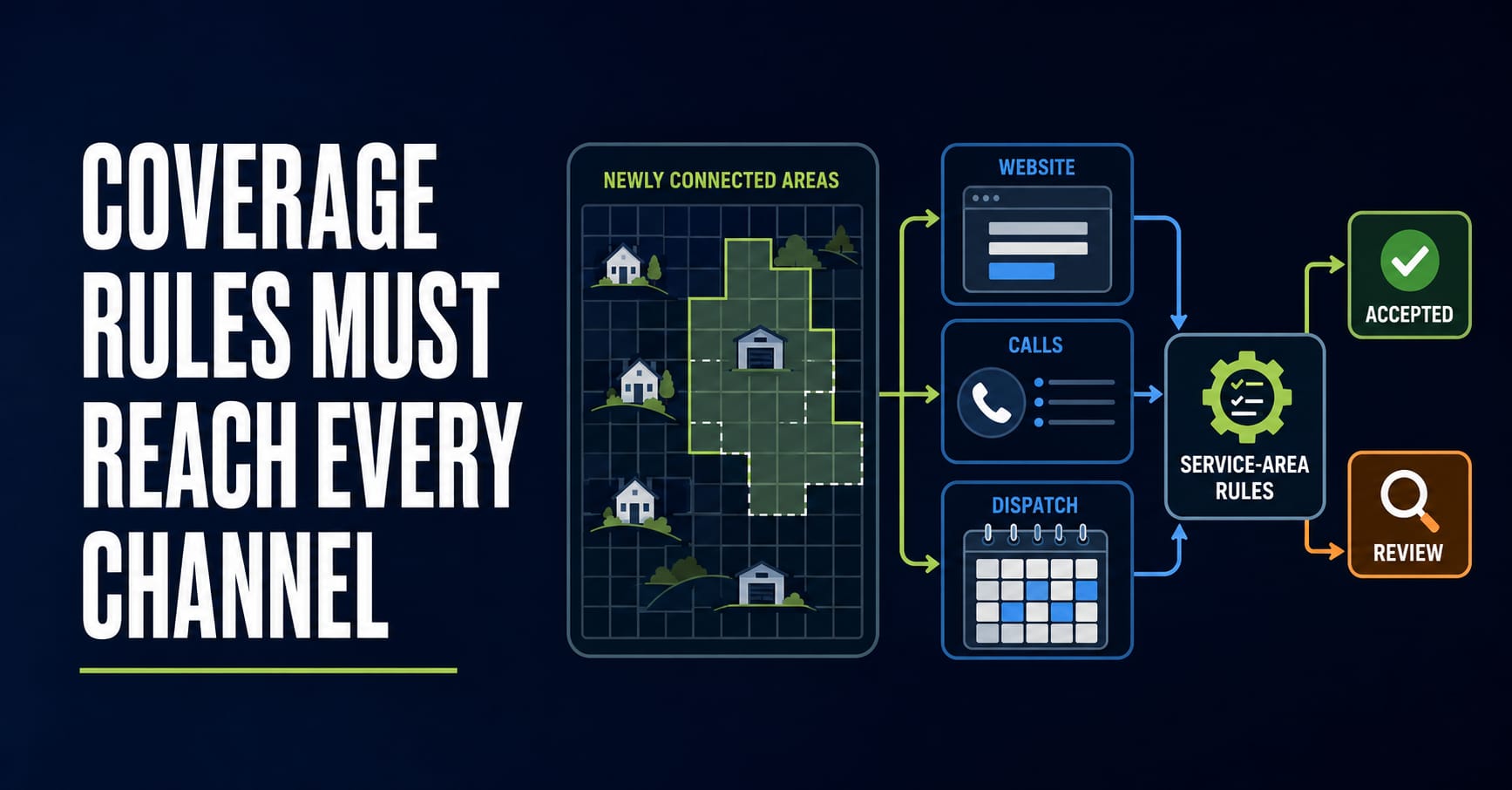
Field service area management should give every customer channel the same answer about where a business operates. Maintain one controlled set of rules covering postcode, service type, team ownership, skills, travel limits and booking capacity, then apply it to the website, telephone workflow, CRM and dispatch process.
This prevents territory expansion from producing conflicting promises, wasted quotations and bookings that the field team cannot fulfil.
What changed on 6 August 2026
The UK Government announced a rural broadband milestone on 6 August 2026. More than 60,000 homes and businesses across Yorkshire and Lincolnshire can now access gigabit-capable broadband through Quickline’s Project Gigabit rollout. The announcement names communities around Barnsley, Huddersfield, Hull, Bradford, York, Boston and Wisbech among those benefiting.
This is a rollout milestone, not a claim that every premises in those wider areas is connected or has purchased a service. Quickline’s earlier Project Gigabit contract announcement provides background on the publicly funded build across hard-to-reach premises.
Ofcom’s Connected Nations Spring 2026 update, published on 13 May using January 2026 data, reported gigabit-capable broadband availability at 89% of UK homes. Rural availability remained below urban availability.
For a home-service operator, better connectivity can support online enquiries, remote administration, digital payments and field communication in areas that were previously harder to serve. It does not decide whether an engineer can reach an address profitably or within the promised window.
Why field service area management fails during expansion
Service territories often exist in several forms. Marketing has a town list, the website has landing pages, call handlers use a postcode spreadsheet, the CRM assigns by county and dispatch relies on practical travel knowledge. These definitions can disagree at the boundary.
Geography is only the first eligibility test
A postcode may fall inside the broad territory, but the requested service could require a skill, license, part or vehicle that is unavailable locally. Coverage must combine address and service capability.
Website changes can outrun operations
A new location page may generate enquiries before scripts, ownership rules and calendars are updated. Dispatch may discover the conflict after a customer has been given a date.
Broad areas conceal travel cost
County names and mileage radii do not reflect rural roads, congestion or the starting position of the appropriate engineer. An eligible address can still create an uneconomic route.
Exceptions become invisible promises
Teams sometimes serve an edge postcode for a high-value job or an existing customer. If the reason is not recorded, staff may treat the exception as a permanent expansion and repeat it under different conditions.
Rejected demand is not measured
An out-of-area enquiry may indicate a viable cluster, a partner opportunity or an incorrect boundary. When it is discarded without a reason, leaders lose evidence for the next territory decision.
A six-part field service area management design
- Define the serviceable unit: Start with postcode or validated address, then add service type and required capability. State whether the rule permits a quotation, survey or confirmed appointment. “We cover Yorkshire” is a marketing statement. It is not a booking rule.
- Establish one authoritative rules record: Create a service-area register with effective dates, owner and approval history. Record areas, supported services, branch ownership, travel limits and exceptions. An IT consulting review can map where current coverage decisions live and which handovers create conflicting answers before any platform is changed.
- Connect every enquiry channel: The website, telephone team, branch and referral partner should use the same logic. Google’s service-area guidance allows businesses to specify cities, postal codes or other areas on Google Business Profile, but that public setting should reflect the operating rule rather than replace it. Capture the original address and channel in the CRM even when service is unavailable. Do not force customers to choose an inaccurate nearby town simply to submit a request.
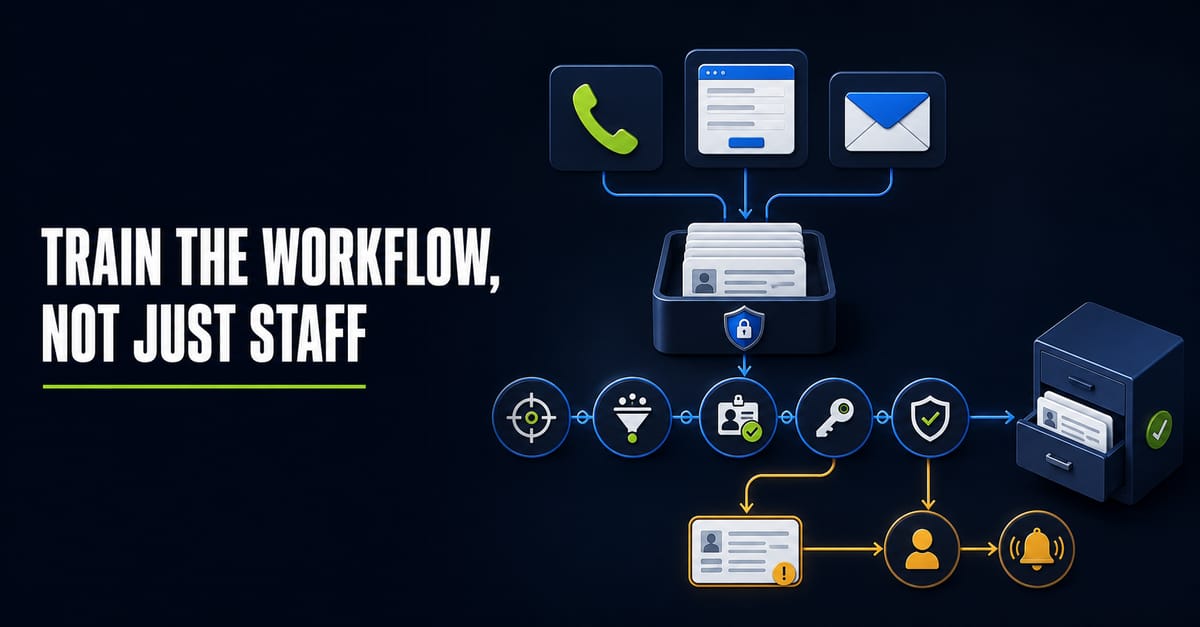
- Test capacity before confirming: Territory eligibility should not equal an automatic appointment. Confirm the required skill, equipment, travel time, working hours and current capacity. Where those conditions change daily, the system should return available options or a review status, not make a permanent yes-or-no decision.
- Design a controlled exception route: Send uncertain addresses and high-travel jobs to a named reviewer. Show the reason, customer need, capacity and effect on existing commitments. Record whether the decision is one-off, time-limited or a permanent rule change. A single accepted job should not silently redraw the territory.
- Measure the boundary: Review enquiries accepted, declined and referred by postcode, service and reason. Compare conversion, travel time, cancellations and repeat demand at the edge. These measures help leaders decide whether to add capacity, create designated service days, use a partner or keep the boundary unchanged.
Where agreed rules need to connect forms, CRM records and scheduling tools, custom software development may be considered after the operating decisions are defined. The purpose is consistent control, not adding another isolated system. Related operational guidance can be organized through the Don-Clem Technology blog.
An illustrative property-maintenance example
Consider a property-maintenance company serving landlords across East Yorkshire. Growing enquiries make several rural postcodes appear attractive.
Marketing adds the villages to the website. The call team accepts heating, plumbing and electrical requests under one broad coverage label. Dispatch later finds that only the plumbing team serves the area routinely, while the qualified heating engineer would need an excessive round trip on the requested day.
A controlled design uses address, service type and engineer capability together. Plumbing requests can proceed to available slots. Heating requests enter manual review or are offered designated service days. Electrical work remains unavailable until suitable capacity exists. Every decision is recorded, so demand can be reviewed rather than guessed.
This is an illustrative scenario, not a Don-Clem Technology customer result.
What technology should and should not do
Technology should validate addresses, apply one versioned rule across channels, assign ownership, check relevant capacity, preserve declined demand and route uncertain cases to a person. It should show staff why an enquiry was accepted, declined or held for review.
Technology should not promise service merely because a postcode is inside a drawn area. It should not infer engineer competence, ignore travel conditions, convert a one-off exception into policy or reject a vulnerable customer without an appropriate review route.
The system should enforce the commercial and operational decisions that responsible managers have made. It should not invent those decisions.
Frequently asked questions
- Should a service area use towns, radius or postcodes?
Use the smallest practical unit your systems and teams can maintain accurately. Postcodes or validated addresses are usually more precise than county or town labels, but they still need service and capacity rules.
- Should an eligible postcode allow instant booking?
Only when the required service, skill, travel time and capacity are also confirmed. Otherwise offer a request or review route rather than a guaranteed appointment.
- What happens to out-of-area enquiries?
Record the address, service and rejection reason. Review repeated clusters for designated service days, partnerships or justified expansion.
- Who should own service-area rules?
Assign one accountable operational owner, with input from marketing, call handling, finance and dispatch. Changes should have an effective date and approval record.
Conclusion
Field service area management turns geographic ambition into a deliverable promise. Define coverage by address, service and capability, maintain one authoritative rule, connect every enquiry channel, test capacity and preserve a controlled route for exceptions.
Better connectivity may create opportunity, but consistent operations determine whether the business can serve it responsibly.