Heatwave Call Centre Planning for UK Service Teams
Heatwave call center planning in the UK should change how contacts are assessed, prioritized, monitored and connected to field capacity. Extreme heat does not only increase demand. It can turn an ordinary care, housing or maintenance enquiry into a time-sensitive risk involving a vulnerable person, an overheated property or an unsafe working condition.
The right response is an alert-based operating mode with different triage questions, callback intervals, escalation rules and staffing decisions.
What happened on 12 August 2026
On 12 August 2026, current reporting said the Prime Minister would chair an emergency Cobra meeting as the UK responded to extreme heat, drought and wildfires. The meeting was a current coordination event, not the start of the UK’s heat-planning framework.
The UK Health Security Agency’s Heat-Health Alerting system already provides impact-based alerts for professionals whose services may be affected by hot weather. The core season runs from 1 June to 30 September, with yellow, amber and red levels based on likely impact and probability.
For health and social care, the UKHSA provider action card, updated on 21 May 2026, describes actions providers should consider at each alert level.
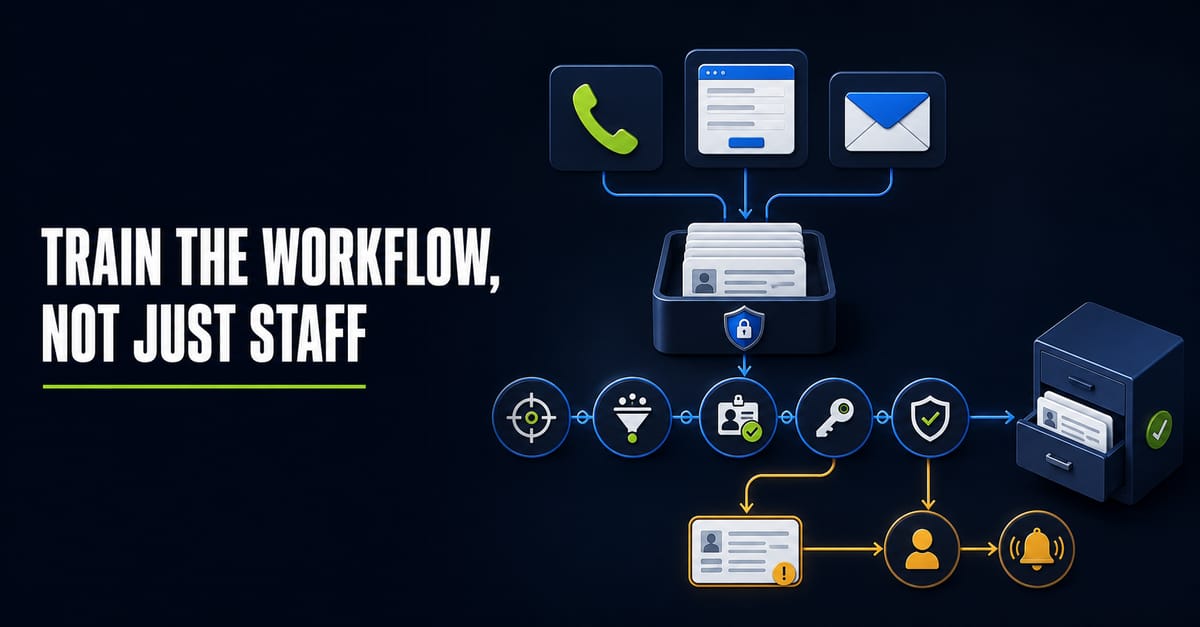
These sources create a clear operational message. An alert is not merely information for staff. It should be an input that changes the service process.
The hidden cost of an unchanged queue
Many call operations are designed around ordinary demand. Contacts enter through phone, email, web forms or messaging. A handler records the issue, applies a standard category and either resolves it or creates a follow-up task.
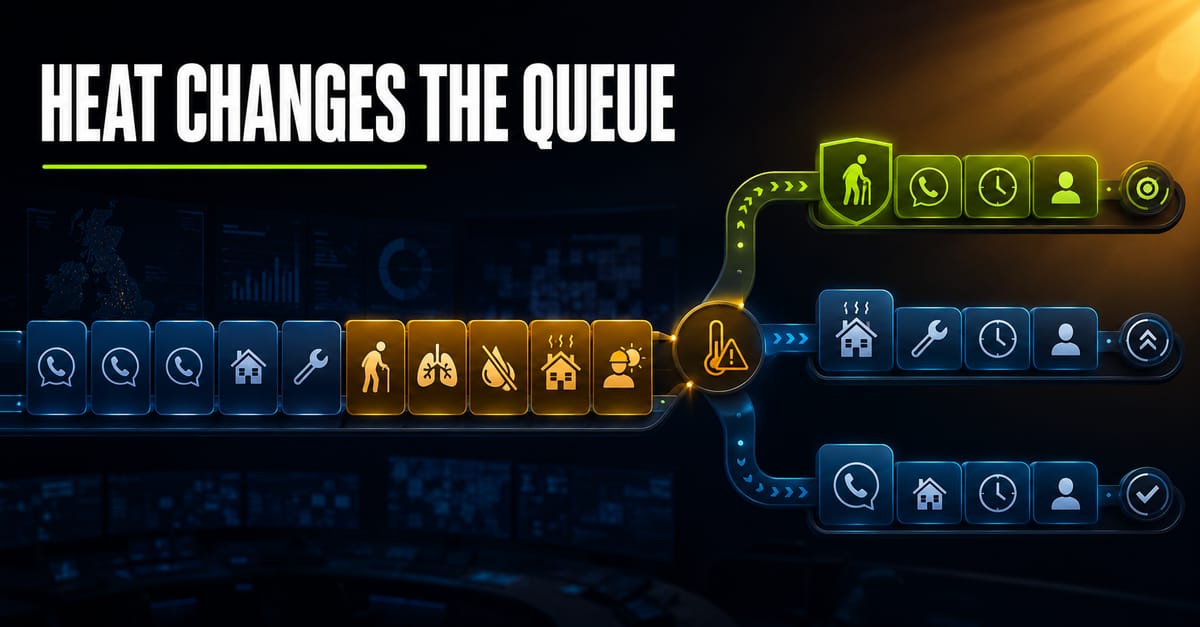
During extreme heat, the category may stay the same while the risk changes.
A tenant reports that a bedroom is too hot. A home-care client says a visit is late. A resident asks when water will be restored. A field technician reports dizziness while working outside. If the system records these as routine property, scheduling or workforce contacts, their shared heat-related risk remains invisible.
This creates four operational costs:
- Misprioritized demand: Lower-risk contacts can be answered before cases where a person’s condition or environment is deteriorating.
- Repeat contact: Customers call again because the first response did not recognize urgency or set a suitable callback time.
- Failed field commitments: Appointments remain scheduled when travel, outdoor work or property conditions make the plan unsafe or unrealistic.
- Management blindness: Average handling and response figures can look stable while vulnerable cases wait inside broad categories.
The lesson is not that every heat-related contact is an emergency. It is that the service needs enough information to distinguish routine inconvenience from increasing risk.
A practical heatwave call center planning framework
1. Connect alerts to operating modes
Define what changes at each relevant alert level. This may include extended management cover, revised scripts, additional outbound checks, different field schedules or a dedicated review queue.
Give one role authority to activate and close the operating mode. Record the trigger, time and changes applied.
2. Add temporary risk questions
Standard issue categories should be supplemented with short questions appropriate to the service. For example:
- Is anyone at the property older, living alone or affected by a relevant health condition?
- Is the property without water, ventilation or a usable cooler room?
- Has the person’s condition changed since the first contact?
- Does the visit require prolonged outdoor or loft work?
Scripts must remain within the competence of the team. Call handlers should not diagnose medical conditions.
3. Create risk-based priority rules
Combine the service issue with vulnerability, environmental conditions and time. A routine repair for one household may require a different response when another household contains a person at higher risk.
Make the reason for priority visible so handlers and dispatch staff understand the decision. Avoid relying on color alone or informal notes.
4. Control callbacks
A promised callback is not sufficient unless the system records an owner, deadline and escalation rule. For changing conditions, set a shorter review interval and ask the customer to report specific changes through the appropriate channel.
If the callback is missed, the case should move to a supervisor queue rather than disappearing into an individual’s task list.
5. Link calls to field capacity
Prioritization must reflect what the field team can safely deliver. Operations leaders should consider travel, outdoor exposure, protective measures, breaks and rescheduling.
This prevents a contact center from promising an attendance time that dispatch cannot support safely.
6. Review demand by risk, not volume alone
Track open vulnerable-customer cases, overdue high-risk callbacks, repeat contacts, unallocated urgent work and field visits affected by heat. Volume and average speed remain useful, but they do not show whether the most consequential cases are controlled.
Don-Clem Technology’s business service technology solutions can support organizations examining how alerts should change work across customer service and operations.
Illustrative domiciliary-care example
Consider a domiciliary-care provider receiving a call that an older client’s midday visit is delayed. This is an illustrative example, not a Don-Clem customer result.
Under ordinary handling, the call may be logged as a scheduling enquiry and placed behind earlier contacts. During a heat alert, the handler asks the approved risk questions and sees that the client lives alone, has limited mobility and has not been reached since the morning.
The case moves to the priority queue. A supervisor confirms who will call the client, who will contact the carer and when the case must be reviewed again. If contact cannot be established, the approved escalation process begins.
The system has not diagnosed the client or replaced professional judgement. It has made the risk, ownership and next decision visible.
Evidence that surge controls matter
During the June 2026 heat episode, London Ambulance Service added 400 crews and increased clinical checks on patients waiting for help. The service explained that repeat assessment helped identify deterioration and prioritize the most seriously ill.
A commercial service operation is not an emergency ambulance service. However, the operating principle is relevant: when conditions can change, a static place in a queue is not enough. Review intervals and escalation must reflect risk.
What technology should and should not do
Technology should change scripts and priority rules when an operating mode is activated, show vulnerability flags appropriately, enforce callbacks and connect customer commitments to dispatch capacity.
IT consulting for operational workflow design can help define the decisions and safeguards before tools are configured. Where existing platforms cannot support alert-based controls, custom software development may be considered against clear requirements.
Technology should not diagnose illness, exaggerate urgency, expose sensitive health details unnecessarily, replace emergency services or allow automated rules to operate without accountable human oversight.
Frequently asked questions
- Should every heat-related call become urgent?
No. Use approved questions and criteria to distinguish routine enquiries from cases involving vulnerability, deteriorating conditions or time-sensitive service failure.
- What is the most important control?
Every higher-risk case needs a named owner, a callback deadline and a defined escalation route.
- Should the contact center promise faster attendance?
Only when dispatch confirms that the commitment is achievable and safe. Queue priority and field capacity must stay connected.
- What should managers monitor?
Monitor open vulnerable-customer cases, overdue priority callbacks, repeat contacts, urgent unallocated work and heat-related field changes.
Conclusion
Extreme heat changes the meaning of demand. Organizations should adapt triage, callbacks, escalation and field coordination so that higher-risk customers do not remain hidden in an ordinary queue.