A Better Letting Agent Complaint Handling Process
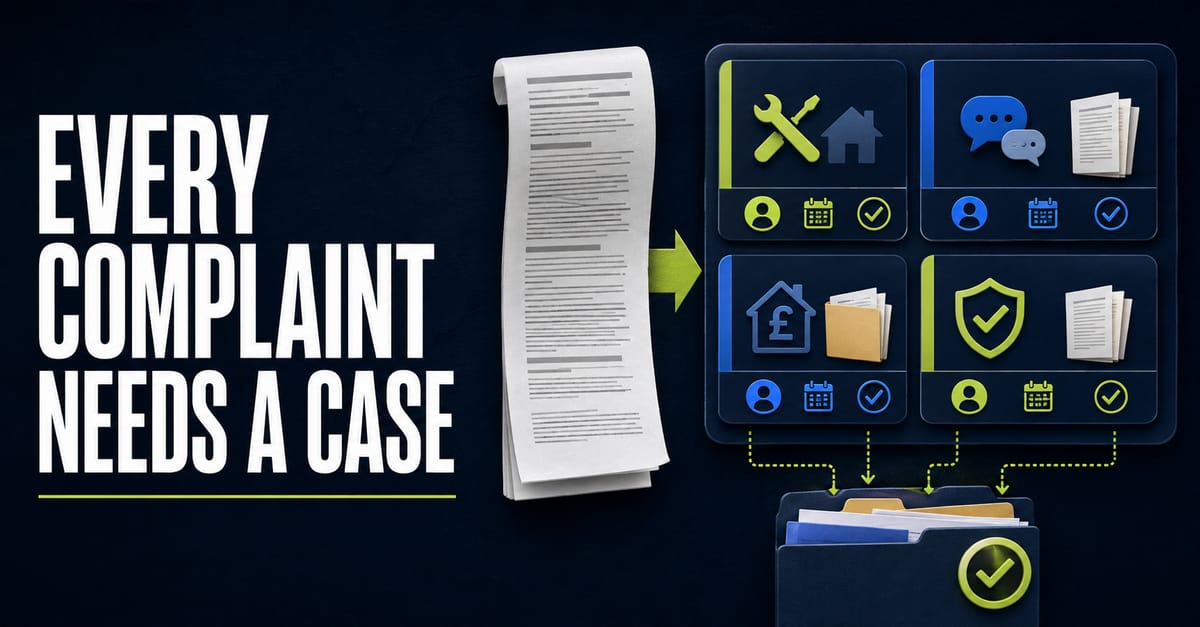
A reliable letting agent complaint handling process converts every complaint into a controlled case. It separates the issues, preserves the evidence, assigns clear ownership, sets response dates and produces one approved answer. That is more dependable than forwarding a long email between teams and hoping someone coordinates the response.
This matters because complaint volume is no longer the only pressure. The length, structure and apparent legal complexity of individual complaints are increasing. Letting agencies need a process that protects fair treatment for tenants while keeping internal work visible and accountable.
What happened on 11 August 2026
The Financial Times reported on 11 August 2026 that UK letting agents were receiving more long, detailed and legalistic tenant complaints created with help from artificial intelligence. Some complaints reportedly include inaccurate or outdated legal references, which increases the work required to check and answer them properly.
This is not an isolated observation from one day’s coverage. Propertymark warned on 10 December 2025 that AI tools were making it easier to produce detailed, legal-sounding complaints quickly. It also stressed that many complaints are reasonable and well-intentioned. The operational concern is the speed, volume and complexity that smaller firms must absorb.
In March 2026, Propertymark’s summary of The Property Ombudsman’s 2025 casework reported that lettings disputes had increased by 65 per cent compared with 2024. Communication delays, repairs, property condition, professional standards, agreements, fees, deposits and rent were among the recurring subjects.
The dated development is therefore the Financial Times report published on 11 August 2026. The underlying operational shift had already been recorded by Propertymark and The Property Ombudsman during 2025 and early 2026.
Why this matters to letting-agency leaders
The wrong response is to treat AI use as proof that a complaint is weak. A tenant may use a writing tool to organize a legitimate concern, communicate more clearly or understand an unfamiliar process. Every issue still requires a fair review against the tenancy records, relevant obligations and the agency’s procedure.
The management problem begins when a multi-page email is treated as one unit of work. A single complaint may combine a repair delay, disputed communication, a payment question and a statement about legal duties. Those issues may belong to different people, but the complainant expects one coherent answer.
Without a controlled property management complaint workflow, four failures become likely:
- Unclear ownership: Several people read the email, but nobody owns the complete case.
- Fragmented evidence: Inspection notes, call records, contractor updates and account entries sit in different systems.
- Hidden deadlines: Response dates depend on individual diaries or inbox reminders.
- Contradictory answers: Separate teams reply without seeing the complete history or approved position.
Senior staff then spend time reconstructing events rather than making decisions. The cost is not simply the time required to read a long complaint. It is the coordination burden created by work that has no clear case structure.
A six-step letting agent complaint handling process
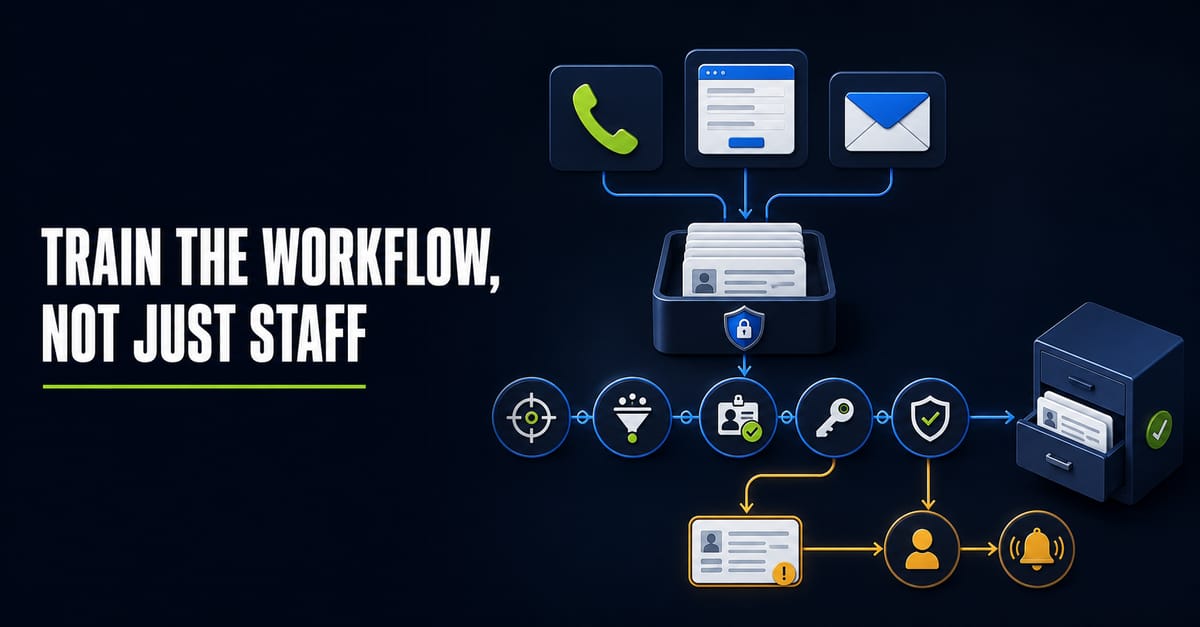
1. Capture the original complaint
Keep the original message and attachments unchanged. Record when it arrived, the property and tenancy involved, the complainant’s details and the acknowledgement sent. Do not rely on an edited summary as the only record.
2. Separate the issues
Break the complaint into distinct questions or allegations. A repair issue, deposit query and communication failure require different evidence and may require different owners. Preserve the complainant’s meaning while removing repetition from the internal task list.
3. Build an evidence register
For each issue, identify the records needed to reach a factual view. These may include maintenance reports, photographs, inspection records, call notes, emails, contractor messages, account entries and tenancy documents. Mark missing evidence explicitly rather than assuming it exists.
4. Assign ownership and dates
Give every issue one named owner, a due date and a defined escalation route. The case itself also needs one coordinator who can see all workstreams and is accountable for producing the consolidated response.
Property firms reviewing this design can connect it to their wider real estate technology solutions (https://www.donclemtech.com/industry/real-estate) rather than creating another isolated spreadsheet.
5. Apply competent review
Operational staff can confirm events and assemble records, but legal or regulatory questions may require review by an appropriately competent person. The system should flag the need for review. It should not decide whether a legal statement is correct.
6. Approve, respond and close
Produce one clear response that addresses every recorded issue, explains the evidence considered and states the next step. Complete an approval check before sending it. Record the response, any agreed action and the final closure status so the history remains available.
An illustrative letting-agency example
Consider a tenant who sends a six-page email about a recurring leak, slow updates, a disputed charge and a legal provision found online. This is an illustrative example, not a Don-Clem customer result.
Forwarding the complete email to repairs, accounts and a branch manager creates three parallel conversations. Each person may answer only the part they recognize. The tenant then receives partial or conflicting information.
A controlled case separates the matter into four issues. The repairs lead supplies the inspection and contractor history. The property manager provides the communication record. Accounts checks the charge. A competent reviewer checks the legal statement. One coordinator combines the findings into a single approved response and records the actions still open.
The complaint has not been dismissed or automatically accepted. It has been made manageable, auditable and fair.
What technology should and should not do
Technology should centralize the case, connect evidence, make ownership visible, remind people of dates and show which issues remain unresolved. It may assist with identifying repeated topics or summarizing a long submission, provided a person checks the result against the original.
IT consulting for workflow design can help an agency decide what should be standardized before any system is configured. Where existing tools cannot support the required controls, custom software development may be considered against clear process requirements.
Technology should not dismiss a complaint because it appears machine-written. It should not invent missing evidence, decide a legal point, send an unapproved response or hide poor service behind an automated message. Professional judgement and accountability remain human responsibilities.
Frequently asked questions
- Should an agency reject an AI-assisted tenant complaint?
No. Review the substance, evidence and requested resolution. How the complaint was drafted does not determine whether the underlying issue is valid.
- Should every issue have a different owner?
Each issue should have one accountable owner, even when the same person owns several issues. The overall case also needs one coordinator.
- Can a shared inbox manage this process?
A shared inbox can receive complaints, but it rarely provides sufficient issue-level ownership, evidence control, escalation and closure visibility on its own.
- Can software approve the final response?
Software can enforce an approval step and preserve the record. A competent person should approve the substance, especially where legal, safety or regulatory questions arise.
Conclusion
Long complaints do not have to become uncontrolled work. A sound letting agent complaint handling process converts the original message into separate issues, verified evidence, named owners, visible dates and one approved response. That protects the tenant’s right to be heard and gives the agency a defensible way to manage the work.