Martyn’s Law Responsible Person Guide for Property Teams
The Martyn’s Law responsible person is the individual, organization or company that controls qualifying premises for the use that brings them within scope, or controls the premises for a qualifying event. Ownership alone does not decide responsibility. A tenant, operator or event organizer may hold the relevant control, while a facilities or security contractor can perform tasks without taking over the legal duty.
Resolve this question for each premises and event before buying services or assigning notifications.
What the SIA clarified on 5 August 2026
The Home Office published supplementary notification guidance on 14 July 2026. The SIA’s update on Martyn’s Law notification highlighted that guidance on 5 August and explained the expected notification timetable.
When the relevant provisions commence, responsible persons for qualifying premises will generally have three months to submit their initial notification. Changes, including becoming or ceasing to be responsible, will generally need to be reported within 28 days after that initial period. For most qualifying events, notification will be required within 14 days of the event date first being publicized.
Martyn’s Law is expected to come into force in spring 2027, but the exact date has not been confirmed. Organizations are not yet required to notify.
The operationally important point is that another employee, agent or consultant may be authorized to submit the notification, but legal responsibility remains with the responsible person.
Why the Martyn’s Law responsible person can be misidentified
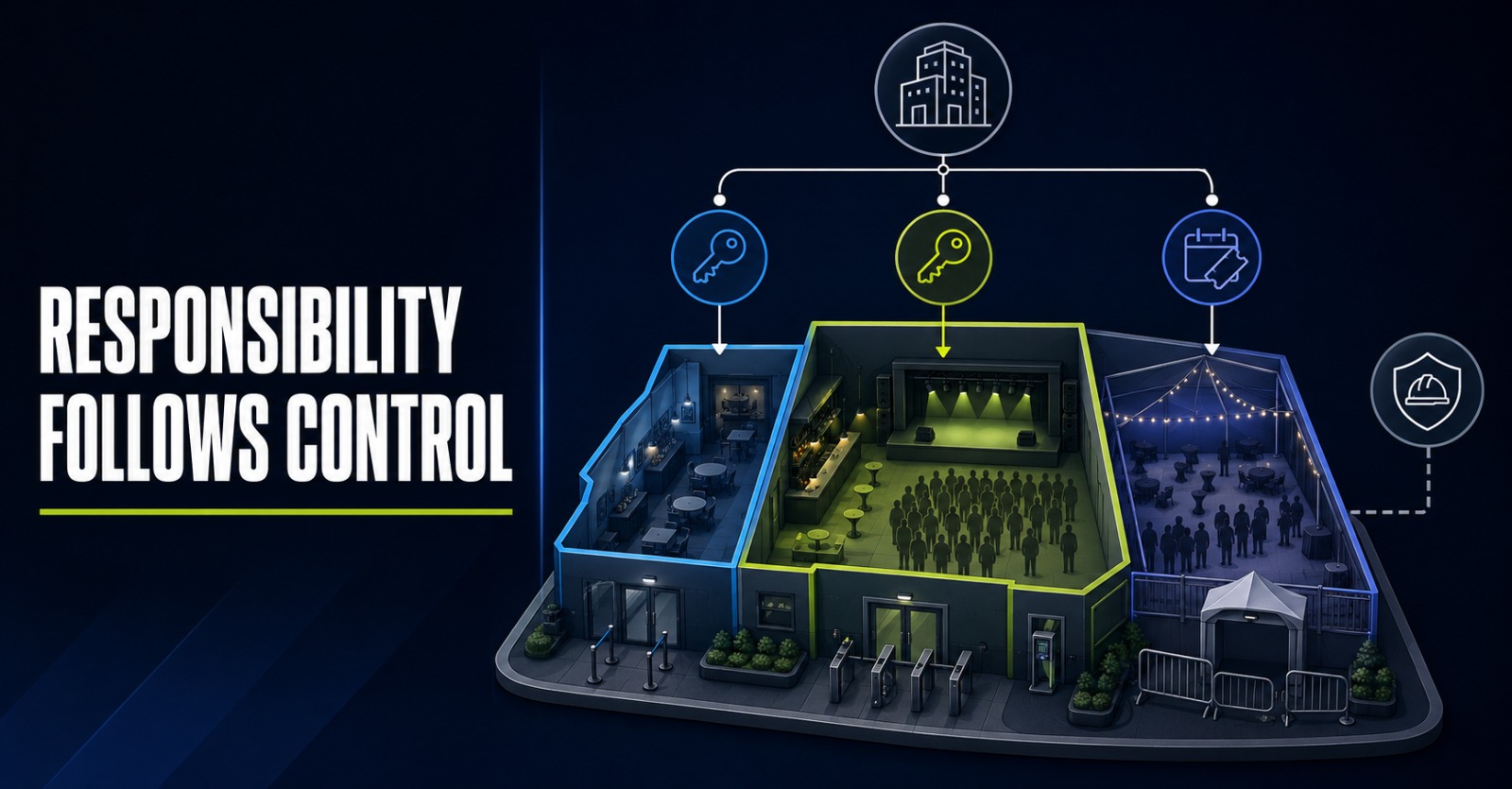
Property operations divide authority across legal ownership, occupation, building management, security, events and maintenance. That structure is commercially normal, but it can obscure the entity that controls the relevant use.
The owner may not control the qualifying use
A landlord may own a retail, hospitality or entertainment building while a tenant controls admission, opening hours, staffing and daily public use. Treating the title holder as automatically responsible can direct preparation to the wrong organisation.
Contractors can own tasks without owning the duty
A facilities company may manage access systems, visitor procedures and emergency plans. A security contractor may control guards and monitoring. These contracts can allocate operational work, but the ProtectUK responsible-person guidance says the responsible person cannot delegate legal responsibility to a contracted service provider.
Event control may differ from ordinary premises control
The organisation running a qualifying event can be different from the party controlling the site outside the event. A venue operator and promoter may therefore need to identify their respective control, co-operation and information duties rather than assume one existing premises record covers everything.
Multi-use and multi-occupancy sites create boundaries
A complex may contain shops, a restaurant, offices and an event area. Some spaces may be qualifying premises, others may fall outside scope, and different organisations may control different uses. One portfolio-level answer can conceal site-level differences.
If the wrong party leads the work, procedures may be designed without the authority or information needed to operate them.
A six-step Martyn’s Law responsible person assessment
- Define the exact premises or event: Start with the physical boundary and relevant use. Record the address, buildings or parts of buildings included, adjoining operational areas and whether the assessment concerns routine premises use or a particular event. Do not begin with the company hierarchy. Begin with the place and activity.
- Test whether it appears to be in scope: Review the Schedule 1 use, exclusions and the greatest number of people reasonably expected to be present at the same time, including staff. The SIA’s scope guidance explains that premises are likely to be in scope where they meet the relevant use and building tests and can reasonably expect at least 200 people at once. Obtain specialist advice where scope or capacity assessment is uncertain.
- Map possession and decision authority: For each relevant period, identify who occupies the premises and who can decide how they are managed and used, particularly who may enter or remain. Examine leases, licences, event agreements and actual operating practice together.
- Record every party with control: List owners, tenants, operators, event organizers and any other party controlling part of the premises or activity. Note the decisions each can make, information they hold and duties requiring co-operation. If two teams each believe the other owns notification, treat that disagreement as a control failure requiring escalation.
- Separate legal responsibility from delegated actions: Name the responsible organization and, where required, the senior individual. Then document which employee or supplier will prepare information, submit notifications, maintain procedures, train staff and monitor changes. The Home Office notification guidance recommends keeping a written record of who is authorized to submit notifications and how that authority was given.
- Build change triggers into property operations: Responsibility and notification information can change through a new lease, operator, event date, use, seating arrangement, license or occupancy assessment. Connect these events to an owned review rather than depending on someone to remember the reporting deadline. For qualifying premises, inaccurate notified information generally needs updating within 28 days. For qualifying events, the corresponding period is generally 14 days. Confirm the applicable requirement when the law commences.
Real estate technology solutions can support property records and operational visibility, but the responsibility model must be defined first. An IT consulting review can map parties, decisions, evidence and handovers. If the agreed process later requires a controlled register, alerts or integrations, custom software development may be considered after legal and operational requirements are confirmed.
An illustrative mixed-use property example
Consider a landlord owning a building containing a restaurant, offices and a hall. The restaurant tenant controls its opening, staff and customers. The landlord’s managing agent maintains shared areas. A promoter hires the hall for a ticketed public event and appoints a security company.
An initial project assigns all Martyn’s Law work to the managing agent because it oversees the building. A control assessment instead records who possesses each area, controls admission and management, and must co-operate. Operational tasks are then assigned without presenting the security contractor as the holder of the legal duty.
This is an illustrative scenario, not legal advice or a Don-Clem Technology customer result.
What technology should and should not do
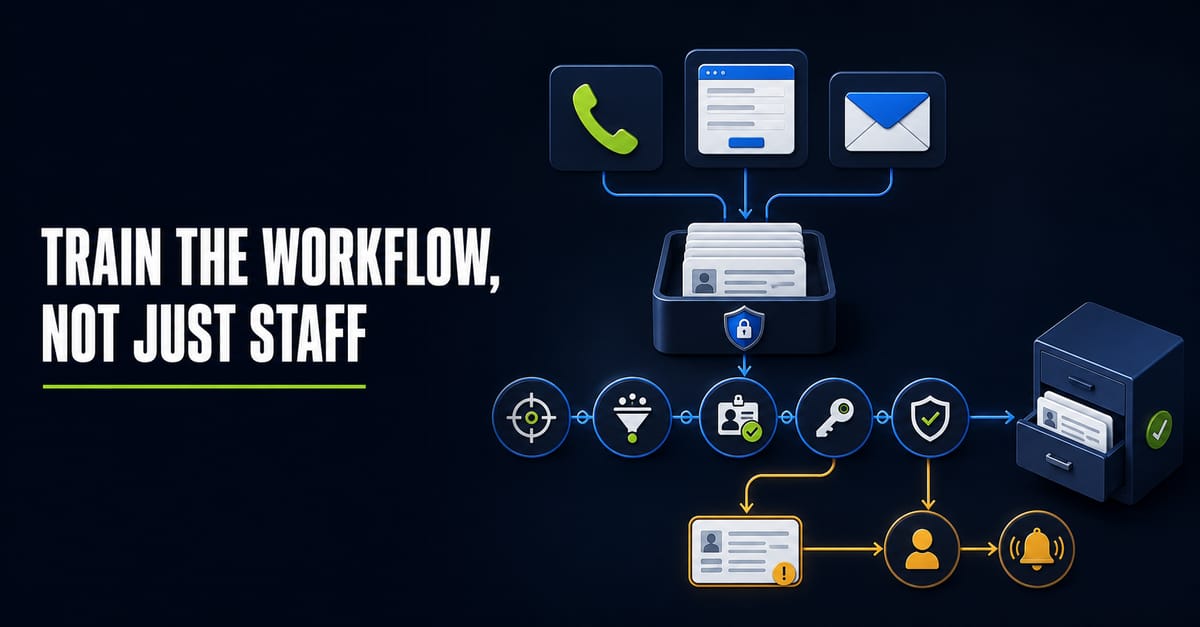
Technology should maintain a premises register, connect leases and event records to responsible-person assessments, record authorized submitters, retain supporting evidence and alert accountable people when relevant details change. It should show unresolved ownership questions before a notification is prepared.
Technology should not decide legal responsibility from a property title, supplier contract or job description alone. It should not reuse one assessment across every site, submit unverified information automatically or imply that buying a platform transfers accountability.
The workflow should keep the qualified decision visible as operations change.
Frequently asked questions
- Is the property owner always the responsible person?
No. The assessment concerns control of the premises for the qualifying use. A tenant, operator or another party may hold that control.
- Can a facilities or security contractor submit the notification?
The responsible person may authorize another party to submit it. The legal responsibility remains with the responsible person.
- Is Martyn’s Law already in force?
No. It is expected to commence in spring 2027, but the exact date has not been confirmed. The SIA will provide further portal information before commencement.
- What should trigger a reassessment?
Review responsibility when occupation, control, use, capacity, event arrangements, licenses or the organizations involved change.
Conclusion
Correct Martyn’s Law preparation begins with control, not procurement. Define the premises and use, assess scope, identify who controls management and admission, distinguish delegated tasks from legal responsibility and connect operational changes to timely review.