Ofsted Provider Verification Checklist for Placements
An Ofsted provider verification checklist should confirm the legal provider, exact service location, current registration, authorized scope, relevant conditions and source evidence before a placement is approved. The completed check should remain attached to the referral decision, with a named owner and verification time.
A provider’s assurance that registration is complete or in progress is not a substitute for checking the regulator’s current record. Organizations should obtain specialist advice where the legal status or required registration is uncertain.
What happened on 4 August 2026
Ofsted announced on 5 August that Catalyst Care Limited and its directors had been sentenced at Croydon Magistrates’ Court on 4 August 2026. The company and directors had pleaded guilty on 9 March.
The Ofsted prosecution announcement says they were fined £92,400 for operating three unregistered children’s homes in Kent between October 2022 and April 2025. The homes accommodated nine children. The company received more than £1.7 million in payments from local authorities during that period.
The directors were also disqualified from carrying on, managing or having a financial interest in a children’s home. The Local Government Lawyer report on the sentencing independently reported the court outcome and Ofsted’s intended enforcement direction.
This was Ofsted’s first successful prosecution of this kind. The case concerns specific admitted offences. It should not be used to make assumptions about other organizations with similar names or business models.
Why provider verification is an operational control
Registration is often treated as a procurement document to collect once. In practice, a care organization may add locations, change service models, appoint new managers or receive referrals that do not fit the scope originally reviewed.
The operational question is not simply, “Is this company registered?” It is, “Does the current registration cover this provider, this location, this service and this proposed placement?
Organization-level approval can hide location-level risk
A group may operate several services. Evidence belonging to one home should not be assumed to cover another address. The workflow must match the registration record to the exact placement location.
Application evidence can be mistaken for authorization
An application, acknowledgement email or conversation with a regulator may show that a process has started. It does not by itself prove that registration has been granted or that care may begin.
Evidence can become detached from the decision
A compliance lead may complete a check by email, while a placement coordinator records only “approved” in another system. When questions arise later, the organization cannot show the source, date, scope or person responsible for the check.
Commercial pressure can weaken escalation
An urgent placement, limited capacity or established relationship can encourage teams to accept incomplete evidence. A controlled process must tell staff who can pause the decision and who may resolve an exception.
The Public Accounts Committee report on illegal placements reported that nearly 800 vulnerable children were in illegal homes in September 2024. Capacity pressure explains why difficult decisions arise, but it does not remove the need for a visible and accountable verification process.
]A seven-step Ofsted provider verification checklist
- Confirm the legal identity: Record the provider’s full legal name, trading name where relevant, company or charity identifier and registered contact details. Resolve differences before proceeding.
- Match the exact location: Record the address where care and accommodation will be provided. Do not accept a head-office record, nearby service or another home in the same group as evidence for that location.
- Check the current regulator record: Use the regulator’s official source. Record the unique reference, registration status, source link, date and time checked. Retain a defensible copy or reference to the evidence used.
- Read the authorised scope and conditions: Confirm that the service type, age group and any stated conditions align with the proposed placement. Escalate uncertainty to a qualified compliance or legal professional.
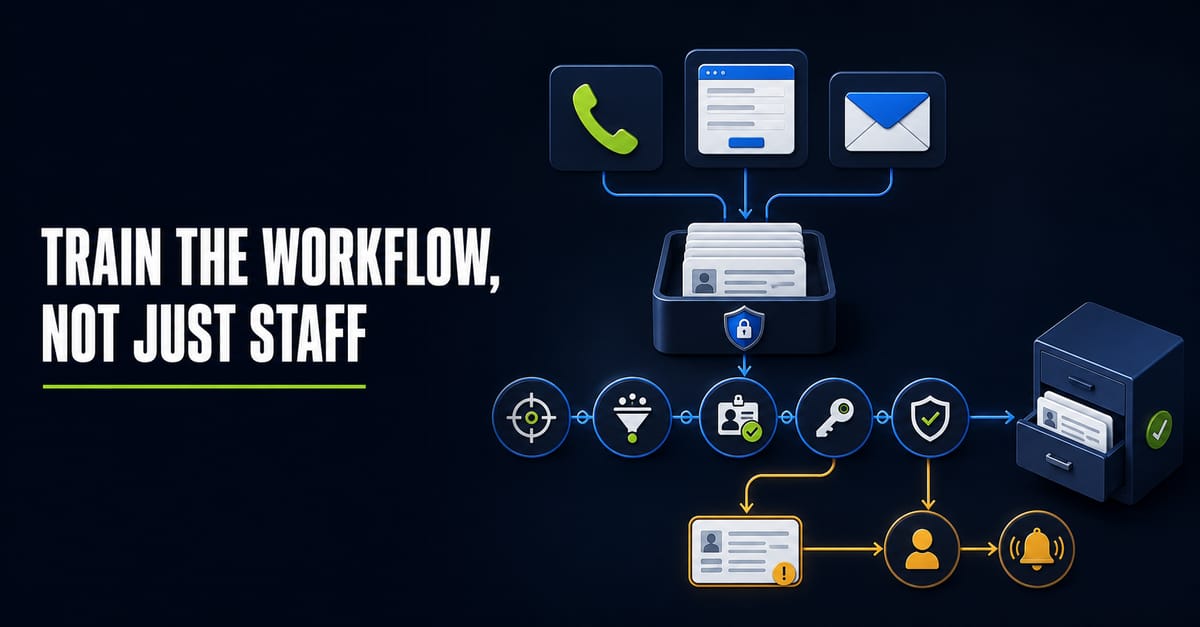
- Connect the check to the referral: Attach the evidence to the placement or referral record. The decision should show the child or service requirement, provider, location, checker, approver and outcome without exposing information unnecessarily.
- Define exception authority: Missing or conflicting evidence should create a stop, not a blank field. Name the person who can investigate, seek professional advice or reject the proposed placement. Record the decision and rationale.
- Set change and recheck triggers: Repeat verification when the location, provider ownership, service model or registration details change. Also define a proportionate scheduled review for active suppliers.
Ofsted’s guidance on provider and manager responsibilities explains that registered providers must continue meeting registration conditions and notify Ofsted about specified events and changes. Verification therefore needs to remain current rather than end after onboarding.
An IT consulting review can map how referrals, provider evidence, approvals and exceptions move between teams. If the agreed process requires controlled records or system connections, custom software development may be considered after the compliance rules are defined. Related operational guidance can be organized through the Don-Clem Technology blog.
An illustrative supported-care example
Consider a care organization reviewing a new referral partner with several properties. The provider supplies a registration document carrying the group name. The placement coordinator accepts it and records the provider as approved.
A controlled review checks the official source and finds that the document relates to another address. The proposed location has no matching record. The workflow blocks placement approval, assigns the exception to the compliance lead and retains the evidence used.
The organization does not decide from the absence alone that an offence has occurred. It pauses the proposed placement until the service’s status and applicable requirements are established.
This is an illustrative scenario, not a Don-Clem Technology customer result or legal conclusion.
What technology should and should not do
Technology should require service-specific evidence, connect it to the referral, record who checked it and prevent approval when mandatory fields or documents are missing. It should restrict sensitive information, preserve changes and alert the responsible person when re-verification is required.
Technology should not decide whether a complex service legally requires registration, infer authorization from an application, reuse one service’s evidence across a group or approve an exception without an accountable person. Professional regulatory, safeguarding and legal judgement remains essential.
Frequently asked questions
- Is checking the provider’s company name enough?
No. Match the legal provider, exact location, current regulator record, service scope and relevant conditions to the proposed placement.
- Does an Ofsted application permit a home to operate?
An application is not the same as completed registration. Verify the current official record and obtain specialist advice where the position is uncertain.
- Who should complete the verification?
Assign a trained role and a named accountable owner. The placement team, compliance function and commissioning lead may contribute, but responsibility must be explicit.
- How should evidence be retained?
Keep the source, date, reference, scope, checker, approver and decision with the referral or supplier record, subject to appropriate access and retention controls.
Conclusion
An Ofsted provider verification checklist turns a general assurance into a service-specific control. Check the legal identity, location, registration, scope and conditions, then preserve the evidence with the placement decision. Where anything is unclear, stop and escalate before care begins.