Operational Workforce Planning for Service Businesses
Operational workforce planning for service businesses should start with evidence from the operation itself. National employment figures can describe the wider market, but hiring and scheduling decisions should be based on customer demand, work in progress, service targets and the hours genuinely available to deliver the work.
This distinction matters for organizations with 15 to 100 call-handling staff. A small planning error can create long waits, repeat calls, unnecessary overtime or idle capacity. The answer is not a larger spreadsheet. It is a clear decision process supported by connected operational data.
What changed on 11 August 2026
On 11 August 2026, the Office for National Statistics published its latest labour-market transformation update. The ONS said its July readiness assessment found that it was not yet the right time to move headline labour-market statistics to the Transformed Labour Force Survey.
The ONS identified November 2027 as the most likely transition point, subject to a further decision in July 2027. It also said it expected to publish a detailed transition plan in the first quarter of 2027. Reuters reported the decision on 11 August 2026 and noted the quality concerns that have affected the existing Labour Force Survey.
The event date and both publication dates are therefore 11 August 2026. This is a change in the timetable and readiness position, not a new set of headline employment figures.
Why service leaders should care
National labor-market data matters. It can help a director understand recruitment conditions, wage pressure and the broad availability of workers. It cannot tell an estate agency how many valuation enquiries will arrive on Monday morning, or whether a care staffing team will face a surge in urgent shift requests on Friday evening.
The ONS update demonstrates an important management principle: decision quality depends on measurement quality. It also shows the value of refusing to move to a new reporting basis before data, operations and users are ready.
For a service business, the same discipline should apply before changing headcount, rotas or overtime. A workforce plan built from weak or disconnected evidence can make an operational problem more expensive without removing its cause.
The operational risk behind poor workforce planning
- Demand is often counted incorrectly
Many teams count calls or tickets but do not distinguish between new demand and avoidable repeat contact. A customer who calls three times because nobody provided an update may appear as three units of demand.
Adding staff may shorten the queue temporarily, but it does not correct the broken follow-up process.
- Available headcount is not available capacity
A rota may show 30 people scheduled. That does not mean 30 people are available for customer work.
Training, meetings, absence, administration, case notes and escalation activity all reduce usable hours. Planning against names rather than available time creates a capacity gap before the day begins.
- Channel data remains separated
Website forms, telephone queues, email inboxes and messaging tools often produce separate reports. Managers then make one staffing decision from several incomplete views.
This prevents them from seeing whether customers are changing channel because the first route failed.
- Decisions lose their assumptions
Even when a manager makes a sound decision, the reasoning may remain in a private spreadsheet or meeting note. If demand changes, another manager cannot see which assumption needs correction.
- The business repeats the analysis rather than improving it.
A practical operational workforce planning framework
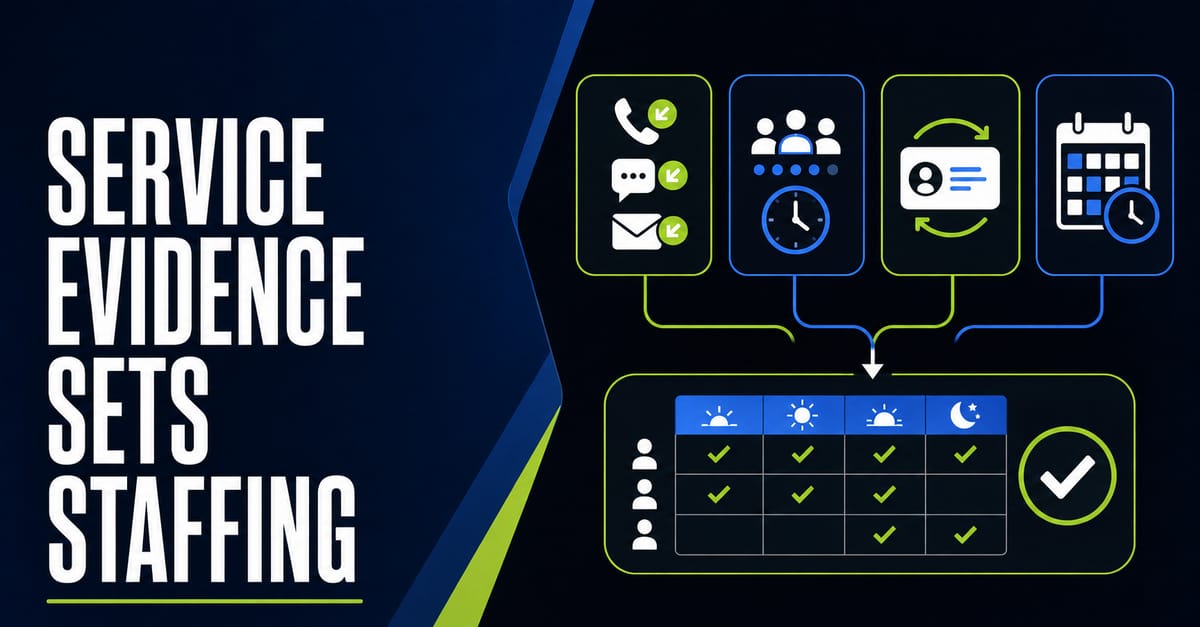
The following five-step method creates a stronger evidence base.
1. Define demand in units of work
Choose measures that reflect the real service commitment. These might include new enquiries, appointments requested, repairs reported, shifts requested, cases opened or calls requiring follow-up.
Separate first contact from repeat contact.
2. Map demand by interval and channel
Daily totals hide pressure points. Review demand by hour or half-hour where queue performance matters.
Record the original channel, any transfer and the final outcome. This shows when demand arrives and how much handling it creates.
3. Calculate usable capacity
Start with paid hours, then account for planned and unplanned time that is not available for customer work.
Use realistic handling and after-contact times. Do not assume every person performs every task or holds every required permission.
4. Compare service outcomes, not only workload
Track waiting time, abandonment, unresolved work, repeat contact and missed commitments. These measures expose whether apparent demand is being created by poor service design.
The CIPD workforce planning factsheet also frames workforce planning as turning information about demand and capability into action.
5. Record the decision and review date
For every rota, overtime or recruitment decision, record the evidence used, the assumption made, the owner and the review point.
This converts workforce planning from a periodic opinion into a controlled operating process.
An illustrative service example
Consider a property-service company handling repairs for several managed developments. Monday call volumes rise, and the first response is to add two agents to the morning rota.
A closer review shows that many calls concern repairs reported during the previous week. Customers are calling again because contractor attendance times were not confirmed.
The immediate staffing change may still be useful, but the lasting correction is different: assign one owner to each repair, trigger an update when an appointment changes, and show unresolved commitments in one queue.
This example is illustrative and is not presented as a Don-Clem Technology customer result. It shows why demand measurement and workflow design must be considered together.
What technology should and should not do
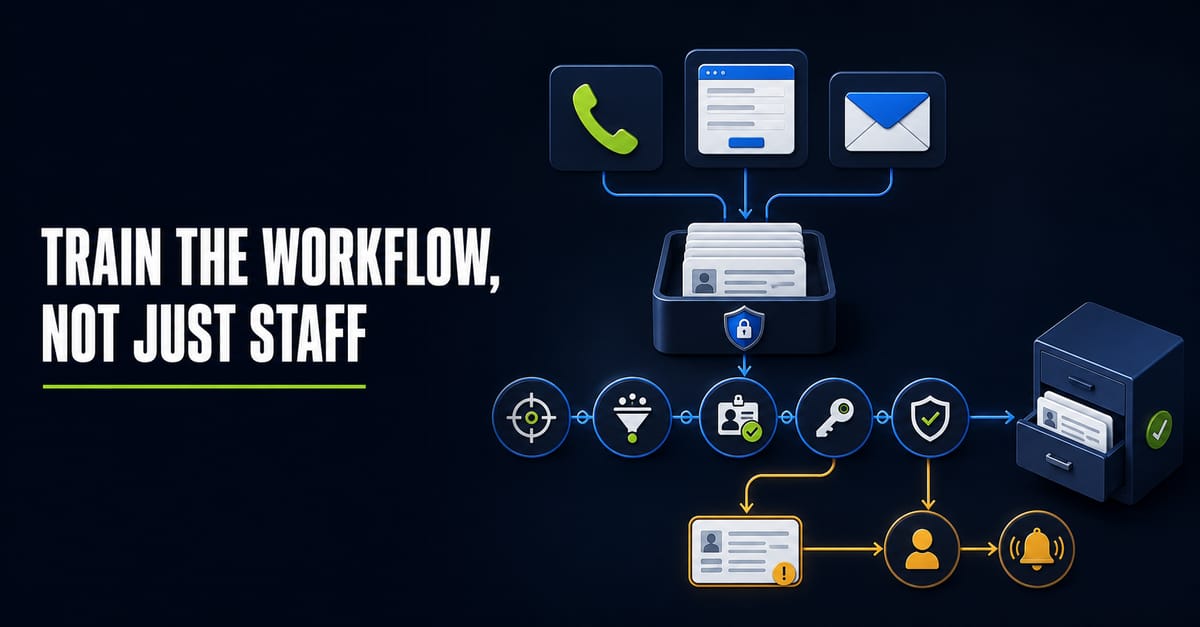
Technology should connect the evidence needed for a decision. It can bring together enquiry sources, queue events, case status, staff availability and service outcomes.
It can flag when demand exceeds a defined threshold, show the owner of unresolved work and preserve the assumptions behind a staffing change.
Business service technology solutions should be designed around the operating decision, not around a collection of attractive charts.
IT consulting for operational systems can help define the measures, responsibilities and controls before implementation. Where existing tools cannot support the workflow, custom software development may provide a suitable route.
Technology should not make an unreviewed hiring decision, disguise uncertain data or treat every contact as equal. It should not automate a broken process faster.
Managers remain responsible for service priorities, employee welfare, regulatory duties and the judgement required when conditions change.
Frequently asked questions
- Should national labour-market data be ignored?
No. Use it to understand recruitment conditions and wider trends. Do not use it as a substitute for evidence about your own demand and capacity.
- Which measures should a service team review first?
Start with new demand, repeat contact, unresolved work, waiting time and genuinely available hours. Add more measures only when they improve a specific decision.
- How often should the workforce plan be reviewed?
Review operational plans at the interval at which demand can change meaningfully. For a call queue, that may be daily or intra-day. Review longer-term hiring assumptions monthly or quarterly.
- Can a dashboard solve poor staffing decisions?
Not by itself. A dashboard helps only when definitions are clear, data sources are reliable and someone owns the action that follows.
Conclusion
External employment data provides valuable context, but customers experience the capacity of your operation, not the national average.
Connect demand, queue performance, available hours and service outcomes before changing rotas or recruiting. Then record the assumption and review the result.