Property Maintenance Escalation Process for Complex Repairs
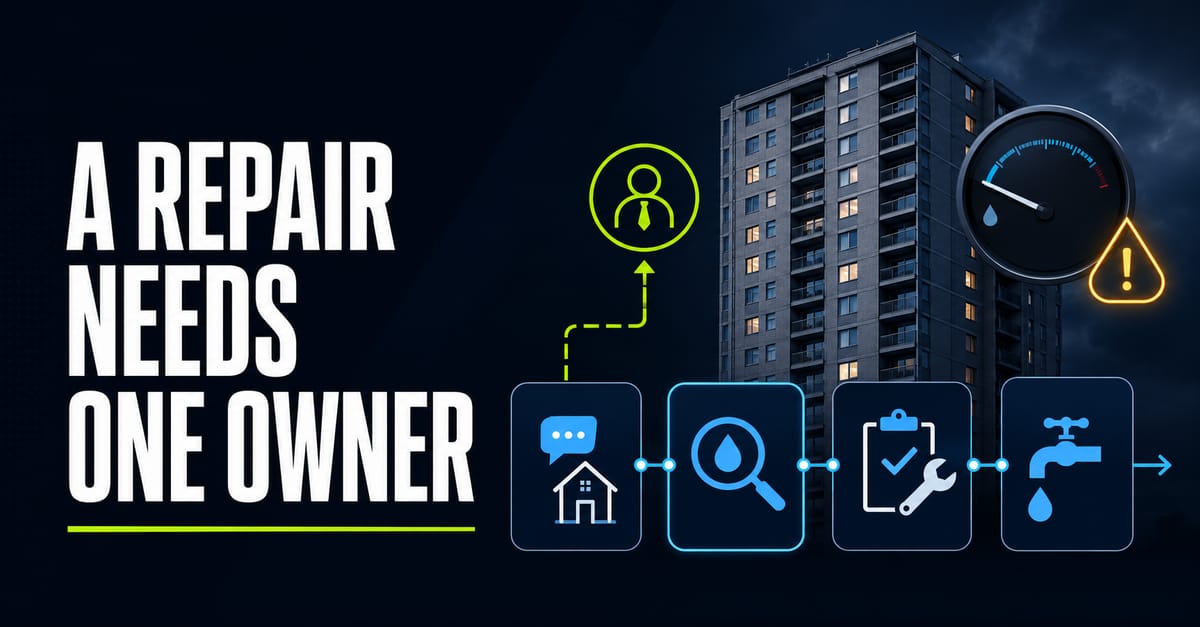
A property maintenance escalation process should keep every resident report, technical finding, risk decision, temporary measure, approval, contractor action and communication commitment connected to one accountable repair case. The case should escalate when service impact worsens, a decision is overdue or progress stops. It should close only after the repair and service outcome are verified.
This is particularly important when a problem affects several homes or depends on several organizations. High activity across teams can still produce a poor resident outcome if nobody controls the complete case.
What was reported on 11 August 2026
The Guardian investigation published on 11 August 2026 reported unreliable or insufficient water pressure across nine blocks on the Devons Road estate in Tower Hamlets. Residents told the newspaper that problems began during 2025 and had become widespread by December. The report described the effect on cooking, washing, cleaning and toilet use, including the additional difficulties faced by some vulnerable households.
Poplar HARCA’s Devons Road water-pressure update published on 6 August 2026 acknowledged intermittent pressure and supply problems affecting nine named blocks. It said the Section 20 consultation had concluded for six blocks, contractors had been instructed and listed works were due for completion by 8 September. It also said bottled water continued to be available for affected households.
The Guardian included responses from Poplar HARCA and Thames Water about water pressure, internal building systems, development in the area and the route to permanent pump works. This article does not determine technical or legal responsibility.
The relevant operational lesson is that a prolonged service problem can cross landlord, supplier, leaseholder-consultation, contractor and resident-support processes while the household still experiences one unresolved issue.
Why fragmented repair management becomes expensive
Property-service organizations often structure work by department. The contact center records the report. A surveyor investigates. Procurement or leasehold teams manage approvals. A contractor receives a work order. Customer-service staff answer repeat calls.
Each team may complete its assigned activity. The resident, however, needs an outcome: a functioning service, accurate updates and appropriate support while the problem remains unresolved.
Fragmentation makes residents repeat their history, separates vulnerability information from technical decisions and leaves staff chasing updates. Temporary support can continue without review, while contractors receive work without the complete diagnosis or access information.
The Housing Ombudsman’s repairs expectations state that landlords should clearly record repair reports at first contact, consider individual circumstances and maintain accurate vulnerability information.
The Ombudsman also says poor records or information management played a pivotal role in two-thirds of the repairs cases it upheld. That makes case visibility an operational control, not simply an administrative preference.
Where the property maintenance escalation process breaks
Repeated reports create separate cases
If every call, form and complaint creates an isolated record, managers see several interactions rather than one deteriorating service issue.
Technical diagnosis and customer impact are separated
An engineer may record pressure readings, component condition or required works. The contact team may hold information about missed water supply, health concerns or failed temporary support. A decision-maker needs both views.
Approval activity pauses accountability
A repair may require landlord authority, cost review, consultation or specialist input. These controls may be necessary, but the case still needs an owner, a next decision date and a plan for managing the resident impact during the wait.
Contractor instruction is treated as completion
Issuing a work order proves that work was requested. It does not prove attendance, successful repair or restoration of the affected service. Closure requires evidence from the contractor and confirmation that the operational problem is resolved.
A seven-control escalation process
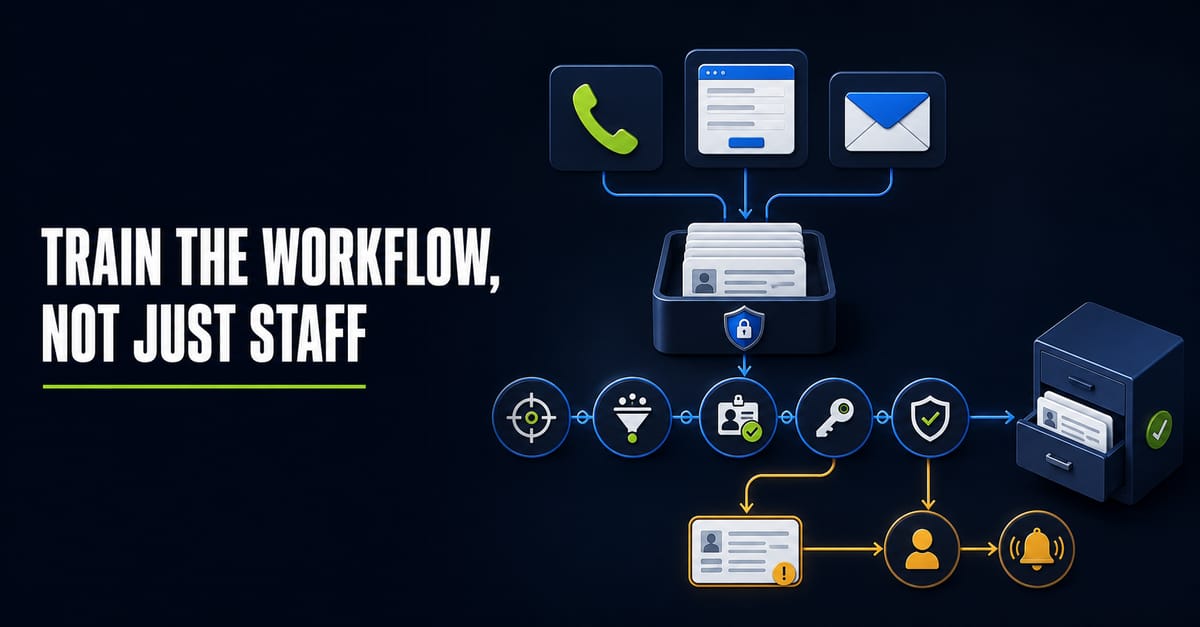
- Create one master repair case: Link every call, form, inspection, complaint and work order to the same property, asset and service problem. Retain the date of the first report even when the case changes category.
- Record impact, not only fault type: Capture which service is affected, how frequently, how many homes are involved and whether household circumstances require additional support. Limit access to sensitive information to authorized people.
- Assign one accountable owner: Specialists can own tasks, but one person or role must own the complete case. That owner maintains the current status, next decision and resident-update commitment.
- Separate investigation from decision: Record what is known, what remains uncertain, which evidence is required and who can authorize the next step. This prevents a case being described as under investigation without a defined route out of that state.
- Control temporary measures: Document bottled water, alternative facilities, temporary equipment or other support. Record who qualifies, how delivery is confirmed and when the arrangement will be reviewed against current household needs.
- Escalate on consequence and delay: Set triggers for worsening impact, repeated failed visits, missed updates, overdue decisions, vulnerable households or a growing number of affected properties. Escalation should identify the decision required, not merely mark the case urgent.
- Verify restoration before closure: Confirm that works were completed, the service is functioning and any remaining resident commitments are resolved. Keep the evidence with the master case.
Real estate and property technology solutions should support this end-to-end view. An IT consulting workflow review can first map where repair information and authority currently separate.
Illustrative managing-agent example
Consider a managing agent receiving low-water-pressure reports from several flats. This is an illustrative scenario, not a Don-Clem Technology customer result.
In a fragmented process, each resident receives a separate ticket. A plumber checks one flat, the building manager requests a wider investigation and customer service continues answering calls without access to the technical plan. The organization records activity but cannot show one current position.
In a controlled process, all affected reports connect to one building-level case while retaining each household’s circumstances. The case owner links the technical diagnosis, interim support, approval route, contractor plan and dated resident update.
A missed decision or worsening impact triggers escalation. The case remains open until water service is verified across the affected homes.
What technology should and should not do
Technology should connect contacts, properties, assets, decisions, work orders and communications. It should preserve the original report date, show the current owner, expose overdue decisions and support verified closure.
Where existing platforms cannot follow the agreed workflow, custom software development may be assessed after responsibilities and access controls are defined.
Technology should not decide legal liability, diagnose a technical fault without evidence, minimize resident impact because a supplier standard appears satisfied or close a case merely because a contractor invoice arrived. Professional judgement and accountable management remain essential.
Frequently asked questions
- What should trigger escalation of a property repair?
Triggers can include worsening service impact, safety or vulnerability concerns, repeated contact, failed visits, overdue approvals, missed communication commitments and delays beyond the organisation’s policy.
- Should several affected homes share one repair case?
Use a master building or asset case for the common fault while retaining linked household records for access, impact, communication and support needs.
- When is a repair ready to close?
Close it when the work is complete, the service outcome is verified and outstanding resident commitments have been resolved.
- Can a work-order system provide complete case control?
Only if it also connects resident contacts, risk, decisions, temporary measures, communications and verification. A work order alone represents one part of the case.
Conclusion
Complex repairs fail when activity is distributed but accountability is not. Keep every report, decision, temporary measure, contractor action and update connected to one master case.
Escalate when impact or delay crosses a defined threshold, and require verified restoration before closure.