Right to Work Checks for Subcontractors in the UK
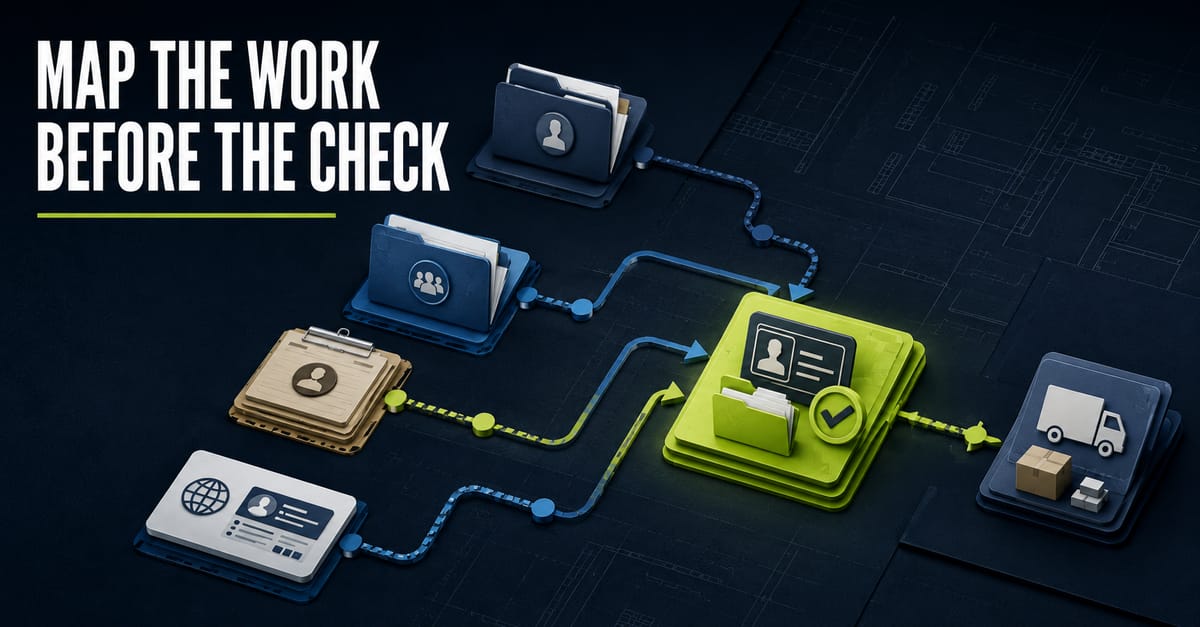
Businesses preparing for expanded right to work checks for subcontractors in the UK should first map every route through which people enter and perform work. The practical requirement is not simply a revised HR policy. It is a controlled process connecting procurement, contracts, identity checks, evidence, deployment and supplier oversight.
Legal advice is necessary to determine how the new rules apply to a particular arrangement. Operational leaders must then make sure the approved decision can be followed consistently in daily work.
What is changing and when
On 24 June 2026, commencement regulations confirmed that section 48 of the Border Security, Asylum and Immigration Act 2025 would come into force on 1 October 2026. The measure extends the illegal-working regime beyond conventional employment into specified wider working arrangements.
The Government’s impact assessment identifies people engaged under a worker’s contract, individual subcontractors and certain online matching services among the arrangements the policy is intended to cover. It also highlights agency work, casual arrangements and intermediaries in sectors such as care and hospitality.
The Government published its consultation response on 30 June 2026. Among respondents, 46% said they checked direct employees only, while 48% checked employees and other worker types. This is consultation evidence, not an estimate for every UK business.
Draft Home Office employer guidance, dated 16 July 2026, sets out proposed operating detail for wider arrangements, contractual chains, online matching services and substitution.
Because it is draft guidance, businesses should check the final code and guidance before implementation.
Why this is an operational leadership issue
Many organizations already have an employee onboarding process. The risk lies in assuming that it covers everyone who performs work under the company name or within its service delivery.
A facilities business may use directly employed coordinators, agency cleaners, individual maintenance contractors and specialist firms that can send substitutes. Procurement may approve the supplier, HR may handle employees, and an operations manager may deploy workers to sites. No single function necessarily sees the whole labor route.
Current legal analysis from DLA Piper describes the implementation challenge as cross-functional, requiring input from HR, procurement, legal, compliance and operations.
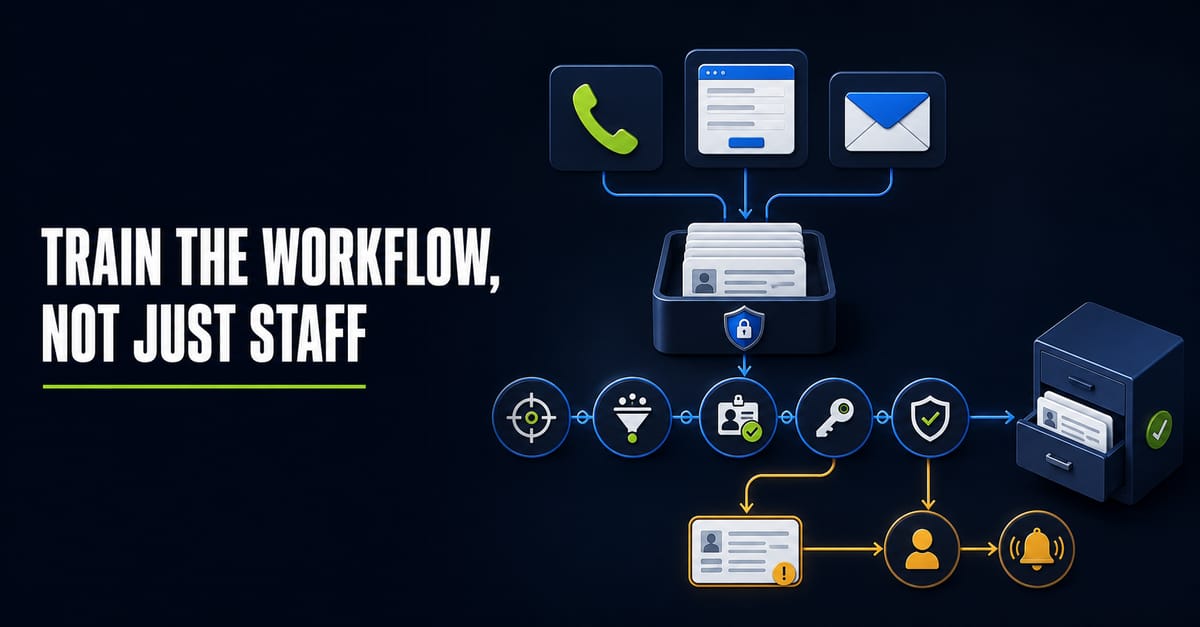
That is why an employee checklist alone is insufficient. Leaders need visibility over four operational questions:
- Who establishes the contractual relationship?
- Who verifies the individual before work begins?
- Where is acceptable evidence retained?
- Who prevents deployment when the required control is incomplete?
If those answers vary by site, supplier or manager, the organization does not yet have one dependable process.
A workflow for right to work checks for subcontractors in the UK
1. Map every labor-entry route
List every way an individual can perform work for or through the business. Include direct recruitment, agencies, individual subcontractors, casual arrangements, labor platforms, outsourced service contracts and permitted substitutions.
Record how each route begins, who approves it and which team can request or deploy the worker. Do not rely only on the organization chart or supplier register.
2. Obtain a scope decision
Ask a competent legal or immigration adviser to assess which arrangements fall within the amended regime and what requirements apply. Preserve that decision with its date, assumptions and responsible reviewer.
The workflow should route uncertain cases for review. It should not allow operational staff or software to make legal classifications by guesswork.
3. Assign control ownership
For each in-scope route, identify who performs the check, who confirms it meets the prescribed standard, who retains evidence and who monitors time-limited permission.
Responsibility may depend on the contractual facts. Avoid writing a blanket rule that assumes every agency, client or subcontractor arrangement works in the same way.
4. Create a deployment gate
Connect the compliance status to scheduling or site access. A worker should not be allocated merely because a manager has received a name by email or messaging app.
Use a clear status such as awaiting evidence, under review, approved, restricted or expired. Define who can override a block, on what basis and how that decision is recorded.
5. Control substitution and changes
A completed check on one person does not automatically control a replacement. Where substitution is allowed, the process must identify who informs the business, who verifies the substitute and how approval reaches the site or scheduler before work begins.
6. Preserve an audit trail
Retain the required evidence, check method, date, reviewer and relevant follow-up date in a controlled location. Link it to the worker and engagement route without exposing unnecessary personal data to operational users.
Businesses can connect this design to broader business service technology solutions rather than adding another disconnected register.
Illustrative property-services example
Consider a regional property-maintenance company that uses employed call handlers, agency cleaners and individual tradespeople. This is an illustrative example, not a Don-Clem customer result.
An operations manager requests a plumber through an approved subcontractor. The named person becomes unavailable, so the subcontractor sends a substitute directly to the site. Procurement knows the contract, but the scheduler sees only the replacement’s name and arrival time.
Under a controlled workflow, the substitution creates a new verification task. The replacement remains unavailable for deployment until the responsible reviewer records the required approval. The scheduler sees the status but not unnecessary identity documents. The site receives confirmation through the approved channel.
This process does not decide the legal position. It applies the organization's reviewed decision consistently at the point where work is assigned.
What technology should and should not do
Technology should make engagement routes, ownership, evidence status, follow-up dates and deployment decisions visible.
IT consulting for workflow design can help define these controls before selecting or configuring a system.
Where existing tools cannot connect supplier onboarding, worker records and scheduling controls, custom software development may be considered after the legal and operational requirements are clear.
Technology should not determine employment status, decide whether an arrangement is legally in scope, accept poor evidence automatically, discriminate on nationality or expose sensitive documents to everyone involved in scheduling. It should support a reviewed process and preserve accountability.
Frequently asked questions
- Do the October changes apply only to licensed sponsors?
No. The expansion is relevant to businesses engaging labor in the UK, not only sponsor-license holders. The application to a specific arrangement requires proper review.
- Is every self-employed supplier automatically covered?
No. The draft guidance distinguishes certain individual working arrangements from typical business-to-business service contracts. The facts and final guidance matter.
- Can a supplier perform all checks for us?
Responsibility depends on the contractual arrangement and prescribed requirements. Confirm the allocation, evidence and audit rights with competent advice rather than relying on an informal assurance.
- What should leaders do first?
Map every labor-entry route across HR, procurement and operations. A business cannot control an arrangement it has not identified.
Conclusion
The October deadline turns right-to-work compliance into a workforce and supply-chain process. Leaders should understand the real movement of labor, obtain the correct scope decisions and connect evidence to deployment controls.